

Protect Your Basement: An Inspector’s Guide to Window Well Drainage in Northeast Ohio
As a homeowner or home buyer in Northeast Ohio, you are likely no stranger to our region’s heavy spring rains, rapid snowmelt, and notoriously dense clay soils. While we often focus our home maintenance efforts on roof gutters and downspouts, there is one critical area of water management that is frequently overlooked until it is too late: the basement window well. When a window well fails to drain properly, it acts like a structural bucket, collecting gallons of water directly against your foundation and basement windows. Over time, this hydrostatic pressure inevitably forces water into your basement, ruining finished spaces and causing costly structural damage. Understanding how to inspect, test, and maintain your window wells is one of the most effective ways to safeguard your home’s structural integrity.
- The Clay Soil Conundrum: Northeast Ohio’s clay soils retain water, making functional gravel pathways and direct footer drain connections absolutely critical.
- The Anatomy of Success: Proper window wells must feature a dedicated drain pipe connected directly to your foundation’s weeping tile system, covered by clean, coarse gravel.
- The 15-Minute Hose Test: Homeowners can safely diagnose drainage health using a simple, controlled water test to observe how quickly water clears from the well.
- Key Warning Signs: Rusting steel wells, pulling window frames, mud accumulation, and interior drywall staining are urgent indicators of drainage failure.
- Proactive Mitigation: Installing fitted, sloped covers and routinely clearing organic debris will prevent 90% of common window well failures.
Why Northeast Ohio Clay and Climate Create the Perfect Storm
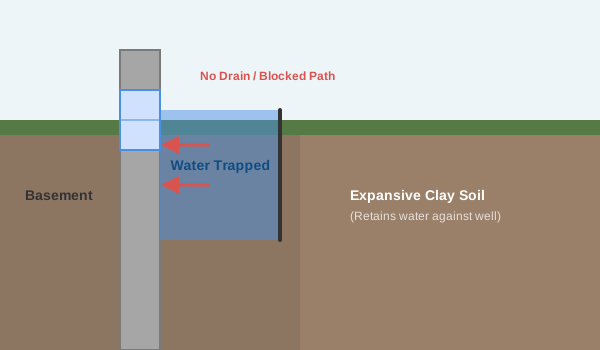
To understand why window well drainage is so vital, we have to look at the unique geology of our region. In Cleveland, Akron, and the surrounding suburbs, our soil is heavily composed of clay. Unlike sandy soils that allow rainwater to disperse rapidly, clay expands when wet and holds onto moisture like a dense sponge. When we experience heavy downpours or rapid snowmelts, the ground surrounding your foundation becomes completely saturated.
This saturated clay exerts intense lateral pressure—known as hydrostatic pressure—against your foundation walls. If your window well is clogged or improperly constructed, water cannot drain downward to your foundation’s footer tile. Instead, the well fills up, creating a literal aquarium against your basement window. Eventually, the water will find the path of least resistance, which is typically through the window seal, the window frame, or cracks in the surrounding foundation wall.
The Anatomy of a Properly Built Window Well
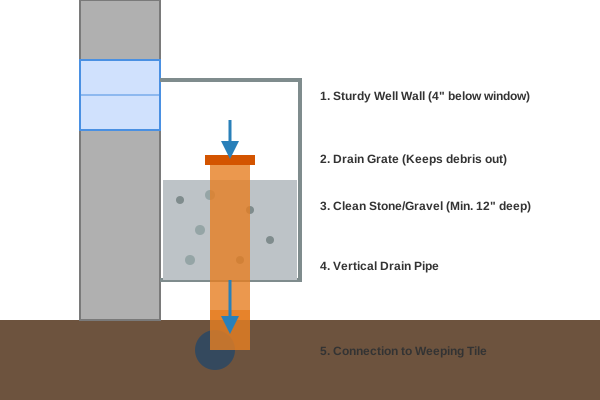
To inspect your window wells effectively, you must first know what a correctly engineered system looks like. A properly built window well relies on a multi-tiered system designed to direct water rapidly away from the window frame and down into your home’s perimeter drainage system. The system begins with a sturdy, semi-circular well wall made of corrugated steel, composite plastic, or masonry, bolted securely to your foundation.
At the bottom of the well, there should be a layer of clean, coarse, washed gravel (typically 3/4-inch stone) that is at least 12 to 18 inches deep. This gravel acts as a filtration medium, slowing water down and filtering out sediment. Embedded within this gravel layer is the critical component: a vertical drain pipe (often a 4-inch rigid or corrugated pipe) covered by a debris grate. This vertical pipe must run straight down alongside your foundation wall to connect directly with your home’s weeping tile (perimeter footing drain) or lead to a dedicated sump pump system. Without this connection, a window well is simply a hole in the ground that will eventually saturate and flood.
How to Inspect Your Window Wells: A Step-by-Step DIY Test
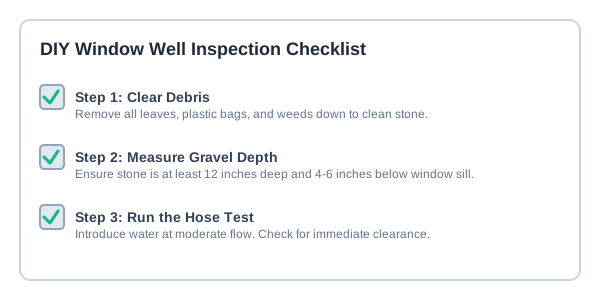
Fortunately, you do not need advanced specialized equipment to perform a preliminary assessment of your window well drainage. The best time to inspect your window wells is before the spring rain seasons hit, or in late autumn before the ground freezes solid. Begin by conducting a visual check. Is the gravel visible, or is it covered in leaves, weeds, mud, and twigs? If debris has settled into the well, it will act like a seal, preventing water from reaching the drain pipe.
Once you have cleared any surface debris, you can conduct the 15-Minute Garden Hose Test. This simple building science test simulates a heavy Northeast Ohio downpour under controlled conditions. Make sure you have a clear view of the basement interior before beginning, preferably with a helper standing inside the basement near the window to watch for any immediate water intrusion or dampness.
The 15-Minute Garden Hose Test Procedure
Place a garden hose directly into the window well, resting it on top of the gravel layer. Turn the water faucet on to a moderate, steady flow—you do not want high pressure, but rather a consistent volume of water mimicking a steady storm. Observe how the well reacts. In a properly functioning system, the water should drain through the gravel and disappear into the drain grate almost as fast as it enters the well. The water level should never rise significantly or pool above the gravel line. If the water level begins climbing up the window frame within 2 to 3 minutes, shut off the hose immediately. This indicates a severe blockage in your vertical drain pipe, a failure in the connection to the footing tiles, or a completely missing drainage system.
Red Flags: Warning Signs of Impending Drainage Failure
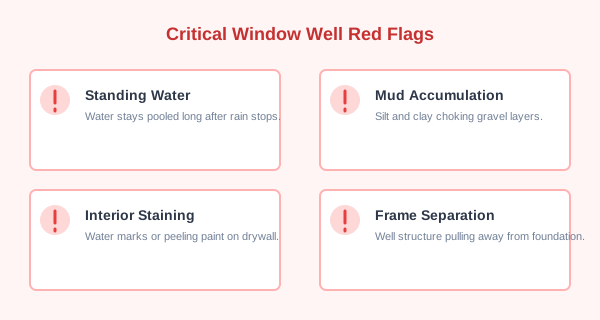
Sometimes, you don’t even need to run a hose test to know your window wells are in trouble. During a professional home inspection, we look for several key “red flags” that indicate a window well is actively failing or has failed in the past. One of the most obvious signs is a visible water line or mud staining on the corrugated steel wall of the well itself. If you see dried mud coating the gravel, it means soil is washing into the well, which quickly chokes out the air gaps in the gravel and clogs the drain pipe below.
Another major structural red flag is when the window well frame has pulled away from the foundation wall. When this happens, a gap forms between the steel or plastic well wall and the concrete basement wall. Saturated clay soil will pour through this gap, filling the well with mud and blocking the drain path. Indoors, look closely at the basement walls directly below and around the window frame. Peeling paint, musty odors, efflorescence (a white, powdery mineral deposit on concrete), rusty metal window fasteners, and damp drywall are all telltale signs that water has been pooling in the window well outside.
Practical Solutions and Remediation Strategies
If your inspection reveals that your window well is not draining properly, you do not necessarily have to jump to the most expensive structural repair immediately. Many window well drainage problems can be resolved with direct, targeted remediation. The first and easiest step is clearing out the old, clogged gravel. Over the years, dirt, decayed leaves, and organic debris break down and mix with the top layers of gravel, creating a dense, clay-like crust that blocks water. Excavating the top 6 to 12 inches of dirty stones and replacing them with clean, washed double-shredded river rock or 3/4-inch limestone gravel can restore drainage dramatically.
For wells that do not have a functional vertical drain pipe running to the footer tile, you have two primary options. The ideal solution is excavating down to the foundation footing and installing a new drain pipe. However, if that is structurally impossible or cost-prohibitive, you must focus on complete exclusion. This means installing a high-quality, heavy-duty, UV-resistant polycarbonate window well cover. The cover must be sloped away from the house and securely fastened to the exterior wall to ensure that rain, snow, and surface runoff are completely directed away from the well basin in the first place.

When to Call a Professional Inspector
While checking your window wells is a highly manageable DIY task, interpreting complex drainage dynamics can sometimes be tricky—especially during a real estate transaction. Some issues, such as a collapsed footer tile or high water table activity beneath your basement slab, can mimic a simple window well backup but require vastly different and more expensive remediation. When you are buying a home or experiencing persistent dampness despite clearing your wells, it is time to call in a professional home inspector.
At Pinnacle Inspection Services, we inspect your home as a complete, integrated system. We look at the interplay between your roof lines, grading, downspouts, window wells, foundation structure, and interior moisture readings to give you a clear, unbiased assessment of your home’s water management. We use advanced diagnostic tools like thermal imaging cameras to trace moisture patterns hidden behind finished drywall, allowing us to pinpoint exactly where and why water is finding its way into your home.
Takeaway: Do not wait for a heavy Northeast Ohio thunderstorm to find out if your window wells are functioning. Spend fifteen minutes this weekend checking your gravel levels, clearing out surface debris, and running a quick hose test. Taking these simple steps now can save you thousands of dollars in water damage repairs later.
If you are buying a home in Northeast Ohio or want a comprehensive evaluation of your current home’s structural drainage, let us help. Schedule your professional home inspection with Pinnacle Inspection Services today. We provide the thorough, detailed, and honest evaluations you need to make informed decisions and protect your investment.