
When walking through a charming bungalow in Shaker Heights, a spacious 1950s ranch in Parma, or a newly remodeled home in Akron, it is easy to get swept away by brand-new quartz countertops, freshly painted walls, and trendy light fixtures. However, as the owner of Pinnacle Inspection Services and a Certified Professional Inspector in Northeast Ohio, I see what lies behind those pristine surfaces. All too often, home sellers or “flipper” contractors attempt to save a quick buck by handling their own electrical work. What they leave behind are hidden hazards—uncovered junction boxes, bootleg grounds, double-tapped panel breakers, and dangerous wire splices buried in attics. Spotting these electrical DIY nightmares before you sign on the dotted line can save you thousands of dollars in emergency repairs and, more importantly, protect your family from severe fire and shock risks.
- Uncover Hidden Hazards Early: Learn how to spot amateur wiring tricks during your initial open house walk-through before making an offer.
- Understand Northeast Ohio Risks: Recognize how historical regional housing stock—from knob-and-tube to 1970s aluminum wiring—interacts dangerously with modern DIY modifications.
- Identify Panel Red Flags: Master the visual cues of overcrowded, improperly sized, or unbonded electrical breaker boxes.
- Protect Your Wallet: Use professional inspector insights and thermal imaging findings to negotiate necessary electrical repairs or seller credits.
- Ensure Home Safety: Distinguish between minor cosmetic electrical defects and immediate life-safety hazards.
The Northeast Ohio Housing Stock vs. The “Weekend Warrior”
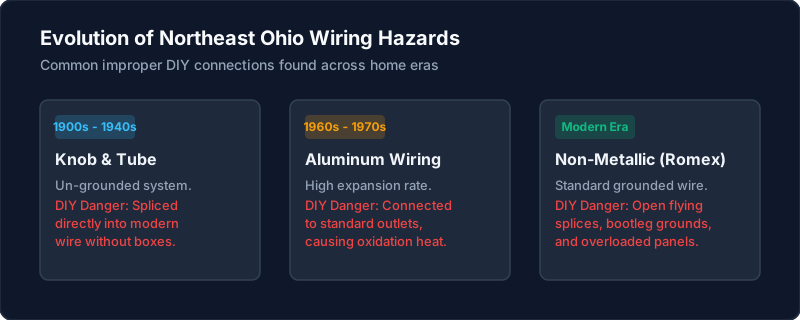
Northeast Ohio boasts some of the most architecturally rich housing stock in the Midwest. From Cleveland’s historic century homes to mid-century developments in Lakewood and Canton, our homes have character. But older structures also come with legacy electrical systems. Over the past several decades, home improvement television and online tutorials have empowered well-meaning homeowners to tackle electrical upgrades themselves. Unfortunately, electrical work is not like painting a bedroom or laying laminate flooring—mistakes do not just look bad; they can be catastrophic.
When a DIY enthusiast attempts to join modern 12-gauge NM cable (Romex) directly to 1920s knob-and-tube wiring without a protective junction box, or attempts to squeeze three circuits onto a single breaker, the home becomes a ticking clock of thermal stress and potential fire hazards. During a thorough home inspection, my primary goal is to audit these historical layers and separate code-compliant updates from hazardous weekend-warrior hacks.
1. Open Splices and “Flying” Wire Junctions
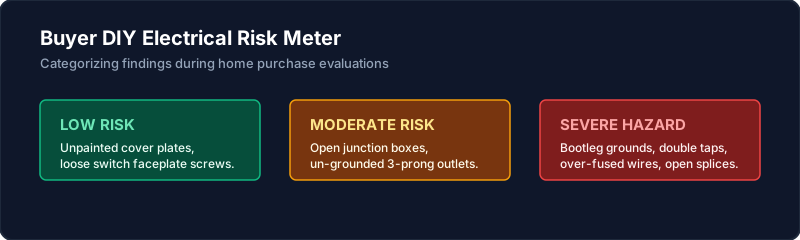
One of the most frequent DIY mistakes uncovered during home inspections in unfinished basements, crawlspaces, and attics is the open wire splice. According to the National Electrical Code (NEC), all wire splices must be enclosed inside an approved, accessible junction box sealed with a cover plate. The reason is simple: if a wire nut loosens or a spark occurs, the sealed metal or plastic box contains the heat and flame.
Homeowners flipping a home frequently cut corners when adding overhead lights or basement receptacles. Instead of mounting a junction box, they twist wires together in thin air, wrap them in electrical tape, and leave them hanging over joists. Over time, electrical tape degrades, exposes live conductors, and presents an immediate shock hazard or ignition source for surrounding wood frame structures and attic insulation.

2. The “Bootleg Ground” Trap in Older Outlets
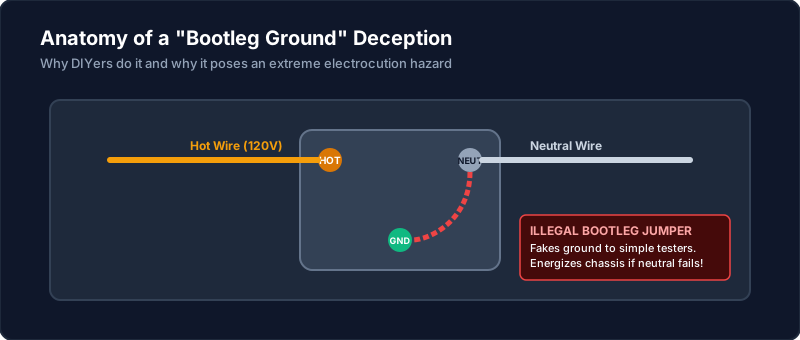
Homes constructed prior to 1962 were generally wired with a two-wire system consisting only of a hot and neutral wire—meaning no dedicated equipment grounding wire was installed. When sellers attempt to modernize a home for sale, they often replace old two-prong receptacles with modern three-prong grounding receptacles. However, simply swapping out the receptacle does not create a ground path.
To pass a basic plug-in circuit tester during a quick buyer walk-through, some DIYers install what is known as a bootleg ground. This involves connecting a small jumper wire between the neutral screw terminal and the ground screw terminal on the receptacle. While a cheap plug tester will show a green light indicating “Correctly Wired,” this trick is extremely dangerous. If the neutral wire breaks or experiences an open condition anywhere upstream, all metal housings of plugged-in appliances (like refrigerators, microwaves, or power tools) instantly become energized at 120 volts. At Pinnacle Inspection Services, we utilize specialized testing instruments and circuit analyzers that detect bootleg grounds instantly.
3. Electrical Panel Red Flags: Double Tapping & Over-Fusing
The main service panel (breaker box) is the brain of your home’s electrical distribution system. It is also the place where amateur electrical work creates the most critical red flags. During home inspections in Cleveland suburban developments, we frequently open main panels to find severe code violations resulting from DIY basement finishes or garage workshop additions.
Double Tapping (Double-Busting Breakers)
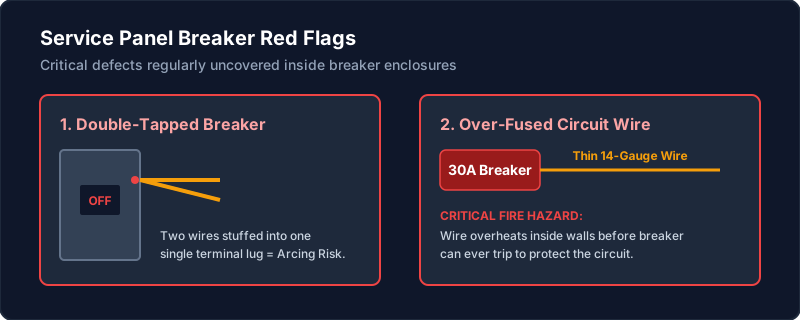
Most standard circuit breakers are designed and listed to hold exactly one wire terminal connection. A double tap occurs when an amateur inserts two separate circuit wires into a single breaker lug. Over time, because the wires may be slightly different gauges or expand differently under thermal loads, one wire loosens. Loose wires create electrical arcing, extreme heat buildup, and severe fire risk inside the panel enclosure.
Over-Fusing (Mismatched Breaker & Wire Gauge)
Wire gauges are rated for specific maximum current carrying capacities. For example, standard 14-gauge copper wire is rated for a maximum 15-amp circuit breaker, while 12-gauge wire is rated for a 20-amp breaker. When DIYers experience frequent breaker trips because they overloaded a room with space heaters or appliances, they often make the dangerous decision to swap out the 15-amp breaker with a 20-amp or 30-amp breaker.
This creates an extreme fire hazard called over-fusing. The breaker will no longer trip when the 14-gauge wire gets dangerously hot inside your walls, allowing the copper conductor to melt its own insulation and set fire to surrounding wall studs long before the breaker ever opens the circuit.
4. Infrared Thermal Imaging: Seeing Hidden DIY Heat
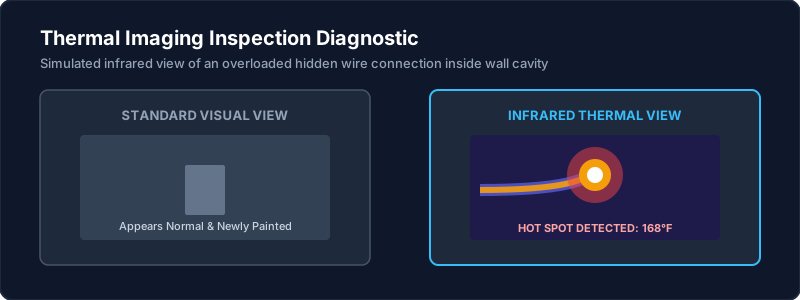
Not all DIY electrical mistakes are visible to the naked eye. Wires tucked behind fresh drywall, junction boxes covered up during a ceiling remodel, or overloaded circuits running inside finished walls remain completely invisible during a visual walk-through.
That is why at Pinnacle Inspection Services, we incorporate state-of-the-art thermal imaging technology. Infrared cameras allow us to measure radiant heat signatures across wall surfaces, outlets, switches, and electrical panel components. An overloaded conductor or loose arc-prone wire connection generates excess heat long before it trips a breaker or catches fire. Thermal imaging reveals these glowing hot spots clearly on screen, providing clear visual evidence for repair negotiations.
5. DIY Quick Check: Red Flags to Spot During Your Open House
While only a licensed professional inspector should examine open panels and conduct electrical testing, home buyers can keep an eye out for obvious visual indicators of poor craftsmanship during an open house walk-through:
- Unsecured Cable Runs: Romex wire stapled loosely across wall faces or hanging down in basements without protective conduit.
- Missing Cover Plates: Receptacles, switches, or junction boxes left exposed without wall plates installed.
- Mismatched Switch Gear: A mix of brand-new modern rocker switches right next to original 1950s toggle switches, suggesting partial DIY remodeling.
- Flickering Lights when Appliances Turn On: Indicates overloaded circuits or voltage drops caused by poor splice connections upstream.
- Extension Cords Used as Permanent Wiring: Heavy extension cords routed through walls, ceilings, or under carpets to power lights or garage openers.
What to Do When You Uncover DIY Electrical Hazards
Discovering DIY electrical mistakes during a home purchase does not mean you automatically have to walk away from the deal. Instead, it provides you with crucial leverage and clear actionable knowledge. When Pinnacle Inspection Services delivers your detailed digital inspection report complete with high-resolution photos and thermal imaging findings, you can:
- Request Professional Repairs: Require the seller to hire a licensed, insured electrical contractor (not another handyman) to repair defects prior to closing.
- Negotiate Financial Credits: Secure financial concessions or price reductions to cover the cost of updating the electrical system after taking ownership.
- Protect Your Home Insurance: Avoid unexpected policy denials due to hazardous panel brands (such as Federal Pacific or Zinsco) or un-grounded wiring conditions.
Can a homeowner legally perform their own electrical work in Northeast Ohio?
In many Northeast Ohio municipalities, minor cosmetic electrical work like changing an outlet faceplate or hanging a decorative ceiling light is permitted for homeowners. However, major wiring additions, service panel upgrades, or installing new circuits typically require municipal permits, plans, and inspections by a licensed electrician. Unpermitted DIY work may create liability issues during sale transactions and insurance claims.
How much does it cost to fix major DIY electrical mistakes before closing?
Repair costs vary widely depending on the severity of the issue. Fixing a single open junction box or replacing a double-tapped breaker may cost $150 to $350. However, resolving widespread bootleg grounds, repairing hidden open splices across an attic, or replacing an overloaded main panel can range from $1,500 to upwards of $5,000 depending on the size and age of the home.
Will standard home insurance cover fire damage caused by unpermitted DIY electrical work?
While most homeowners insurance policies cover accidental fire damage, insurance companies actively audit homes before issuing new policies. If an inspector identifies active hazards like double-tapped breakers, open wiring splices, or obsolete panels, insurance underwriters may refuse to issue coverage until a licensed electrician certifies the system as safe.
Trust Pinnacle Inspection Services for Your Peace of Mind
Navigating the home-buying process in Northeast Ohio requires an experienced partner who knows where hazards hide. At Pinnacle Inspection Services, Jim Husseini, B.S., C.P.I., brings certified master-level expertise, advanced diagnostic equipment, and an unwavering commitment to keeping home buyers safe and informed. Before you finalize your purchase offer, make sure your investment is protected from hidden electrical nightmares.