


As the owner and principal inspector at Pinnacle Inspection Services, I have evaluated thousands of homes across Northeast Ohio—from historic Craftsman homes in Shaker Heights to newly constructed residences in Medina. One of the most frequently misunderstood components of home building science is bathroom ventilation. Many homeowners assume an exhaust fan is merely intended to clear mirror steam after a hot shower or disperse unpleasant odors. In reality, a properly engineered bathroom ventilation system serves as a critical defense against chemical degradation, building envelope decay, and indoor air contamination.
When high humidity combines with everyday household cleaning compounds, volatile organic compounds (VOCs), and potential sewer gases, the interior air transforms into a localized micro-climate of corrosive elements. Without adequate, exterior-directed exhaust pathways, these airborne agents attack metallic fixtures, deteriorate electrical components, corrode HVAC ducting, and rot structural framing. Below is an overview of why proper bathroom venting is vital to protecting your investment and maintaining a healthy living environment.
- Corrosive Air Dynamics: Trapped airborne moisture acts as a solvent and catalyst, accelerating oxidation when mixed with common bathroom chemicals like chlorine, ammonia, and sulfur compounds.
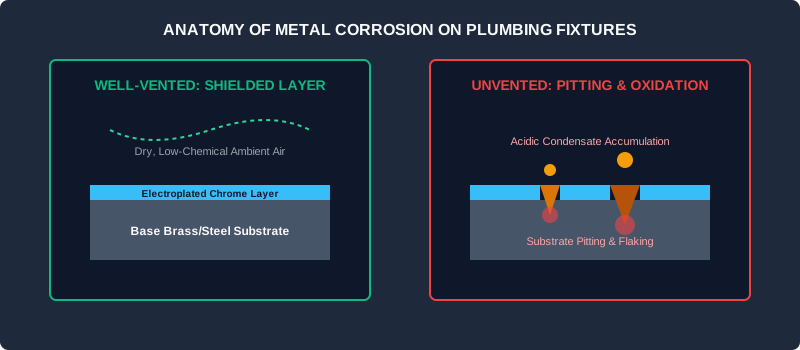
- Metal & Structural Degradation: Unvented chemical vapors actively pit chrome, strip plating from brass fittings, corrode electrical connections, and cause premature rust on structural fasteners.
- Sewer Gas Mitigation: Functional exhaust systems prevent localized pressure differentials that can pull hazardous sewer gases ($H_2S$ and $NH_3$) past dry or improperly vented plumbing traps.
- Regional Climate Risks: Northeast Ohio’s freeze-thaw cycles worsen unvented moisture traps, transforming attic spaces into condensation incubators if exhaust streams dump internally.
- Engineering Best Practices: Achieving effective ventilation requires accurate CFM calculations, smooth-walled rigid ducting, and direct exterior termination with integrated backdraft dampers.
The Chemistry of Unvented Bathroom Air
To understand why bathroom exhaust fans fail or succeed, one must first understand the chemical environment created inside an enclosed bathroom. Bathrooms are high-moisture zones subject to routine chemical inputs. When you shower, water vapor increases the ambient relative humidity, often pushing it to 100%. This moisture acts as a carrier medium for airborne volatile chemicals introduced through daily cleaning routines, personal care products, and municipal water off-gassing.
Moisture Meets Cleaning Agents: A Toxic Mix
Modern households routinely utilize heavy-duty cleaners containing sodium hypochlorite (bleach), ammonia, quaternary ammonium compounds, and synthetic fragrances. When bleach and ammonia are used in proximity—or even sequentially on surfaces without thorough rinsing—they release chloramines ($NH_2Cl$, $NHCl_2$) and chlorine gas ($Cl_2$). In an unvented bathroom, these airborne compounds do not simply dissipate; they dissolve into the surrounding water droplets hanging in the humid air.
This humid, chemical-laden mist settles on every exposed surface. As water evaporates from these surfaces, it leaves behind concentrated chemical residues that interact with oxygen and atmospheric pollutants. This chemical reaction forms mild acidic or alkaline solutions directly on metal fixtures, painted drywall, and ceiling surfaces. Over time, these solutions eat through protective clear coats and initiate aggressive metal oxidation.
Sewer Gas Back-ups and Hydrogen Sulfide ($H_2S$)
Another overlooked chemical threat in bathroom environments is sewer gas infiltration. P-traps under sinks, tubs, and showers rely on a standing water seal to block sewer main gases from entering the living space. However, in poorly ventilated homes—especially those with tight building envelopes or competing exhaust fans (such as strong kitchen range hoods)—negative air pressure can draw sewer gas past vulnerable traps.
Sewer gas contains hydrogen sulfide ($H_2S$), methane ($CH_4$), and ammonia ($NH_3$). Hydrogen sulfide is highly reactive. Even in trace amounts measured in parts per billion (ppb), $H_2S$ reacts with atmospheric moisture to form weak sulfurous acids. This gas rapidly tarnishes silver, copper, and brass, turning bright polished copper wiring and plumbing supply lines into dull, black, corroded surfaces.

Visible & Hidden Signs of Bathroom Corrosion
During a home inspection, I carefully look beyond cosmetic staging to identify performance issues within mechanical and structural systems. In bathrooms with inadequate ventilation, corrosion leaves identifiable markers across multiple components. Understanding these indicators allows home buyers and sellers to spot systemic issues before they lead to structural failures.
Pitting, Tarnishing, and Rusting on Metal Fixtures
The most visible sign of corrosive gas buildup is metal surface breakdown. Modern bathroom fixtures are typically manufactured from brass, zinc alloys, or stainless steel, coated with electroplated finishes such as chrome, brushed nickel, or oil-rubbed bronze. When microscopic acidic droplets settle on these surfaces repeatedly, they breach the thin electroplated layer.
The initial stage of damage presents as persistent water spotting that cannot be wiped clean. As the process advances, you will notice micro-pitting—tiny pinpoint craters on faucets, shower arms, mirror clips, and door hinges. Over time, green copper carbonate (verdigris) forms on brass fittings, while steel fasteners rust. If cabinet hinges, towel bars, or light fixture bases in your bathroom show flaking finish or reddish-brown rust, it indicates that high humidity and trapped corrosive gases are present.
HVAC Ductwork and Electrical Box Degradation
While pitted faucets are frustrating, the hidden damage inside walls, ceilings, and floor cavities presents a greater long-term concern. Corrosive vapors do not remain static; they rise and migrate through unsealed outlet boxes, recessed light canisters, and exhaust fan housing seams.
- Electrical Connections: Metallic junction boxes, ground wires, and terminal screws on switches and outlets exposed to humid chemical air develop copper oxide and aluminum oxide crusts. This oxidation increases electrical resistance, creates loose connections, and poses a potential fire hazard.
- Exhaust Fan Assemblies: The steel housing and blower wheel inside the exhaust fan bear the brunt of unvented vapors. Moisture strips protective oil coatings from fan bearings, causing fan motors to seize, hum, or fail prematurely.
- Supply & Return Registers: Steel HVAC supply vents located in unvented bathrooms routinely show bubbling paint and deep rust scale along their inner flanges, contaminating the central HVAC duct network.
Northeast Ohio Climate Factors & Building Science Failures
In Northeast Ohio, proper ventilation system design requires careful consideration of our regional weather patterns. Homeowners in Cleveland, Akron, Canton, and surrounding areas experience freezing winter temperatures alongside high summer humidity. These weather extremes amplify the consequences of poorly installed bathroom ventilation systems.
Winter Freeze-Lock: Why Terminating in the Attic Fails
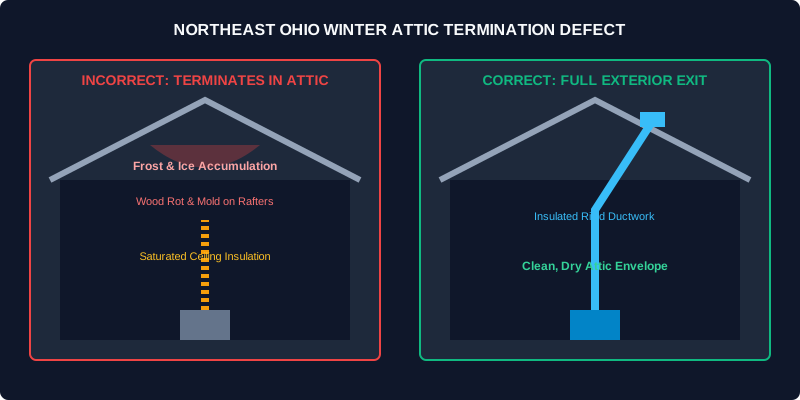
A common defect I document in older homes and uninsulated builder-grade installations is a exhaust fan duct terminating directly inside an attic space, rather than venting through the roof or sidewall. In January and February, outdoor temperatures in Northeast Ohio regularly dip below freezing, turning uninsulated attic spaces into cold sub-zero zones.
When warm, moist, chemically saturated air from a long bath or shower is blown into a cold attic, it hits cold roof sheathing and instantly condenses into liquid water and frost. Over weeks of winter operation, heavy layers of frost accumulate on the underside of the roof deck. When temperature spikes occur, this frost melts, causing severe damage:
- It saturates attic ceiling insulation, rendering R-value thermal protection useless.
- It creates water stains on the drywall ceiling below, often misdiagnosed as roof leaks.
- It feeds wood-destroying fungi (mold and rot) on roof rafters, trusses, and plywood sheathing.
- Chemical residues trapped in the condensed water react with steel roof nails, rusting them through and compromising shingle hold-down strength.
Humidity Traps in Historic Cleveland & Akron Homes
In historic communities across Cuyahoga and Summit counties, many homes were built prior to the widespread adoption of building codes requiring dedicated mechanical exhaust in bathrooms. These older homes relied on operable double-hung windows for natural ventilation.
Opening a window in the middle of a cold Ohio winter is impractical and thermal efficiency losses are significant. Consequently, windows remain shut, trapping moisture and corrosive vapors inside plaster or lathe wall cavities. Unlike modern drywall, original horsehair plaster and wooden lathe hold moisture for extended periods, encouraging hidden fungal growth while oxidizing original plumbing vents and galvanizing supply lines inside the wall envelope.
Inspection & Ventilation Best Practices
When evaluating or upgrading a bathroom exhaust system, home inspectors look for adherence to building science standards. Ensuring your ventilation fan effectively removes humid, corrosive air requires addressing four main components: fan capacity, duct type, termination routing, and backdraft prevention.
Calculating the Correct CFM and Duct Sizing
Airflow capacity is measured in Cubic Feet per Minute (CFM). According to the Home Ventilating Institute (HVI) standards, a bathroom requires a minimum of 1 CFM per square foot of floor area for rooms up to 100 square feet. For larger master bathrooms or rooms with high ceilings, additional capacity calculation is necessary:
- Standard Toilet / Sink Zone: 50 CFM base rate.
- Shower Enclosure: Add 50 CFM of fan capacity.
- Steam Shower Unit: Add 100 CFM of dedicated exhaust capacity.
- Whirlpool / Jetted Tub: Add 50 CFM of fan capacity.
Installing an undersized fan (such as an outdated 50 CFM unit in a 120-square-foot master suite) creates air stagnation. The fan runs without moving enough volume to pull moisture-laden gases out before they condense on cool metal surfaces.
Smooth Rigid Metal vs. Sagging Flex Ducting
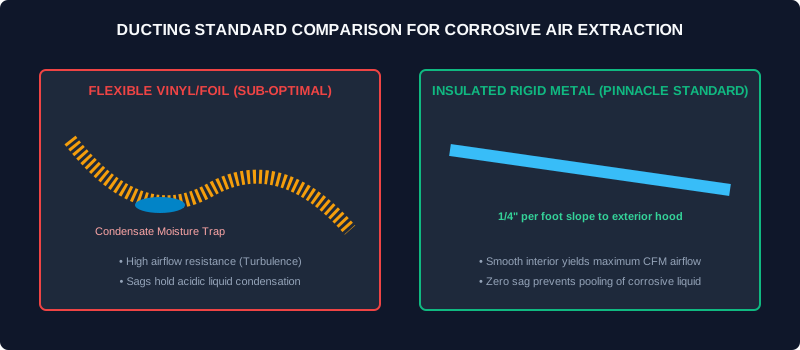
The type of ductwork connected to your exhaust fan plays a major role in system performance. Flexible foil or vinyl accordion ducting is commonly installed due to its low material cost, but it introduces high static friction resistance. The internal ridges create air turbulence, cutting fan airflow by up to 50% over long runs.
Additionally, flexible ducts sag between ceiling joists, creating low points where condensation accumulates. This standing water traps airborne chemicals, accelerates wire coil rusting inside the flex core, and eventually causes the duct to collapse under the weight of trapped water. Best practices require using smooth-walled rigid metal ductwork, wrapped in R-6 or R-8 insulation through unconditioned spaces, sloped slightly toward the exterior exit cap to drain condensation safely.
Protecting Your Property Value & Air Quality
Preventing corrosive gases from damaging your bathroom requires a comprehensive approach. Proper bathroom mechanical ventilation protects metal fixtures, electrical systems, and structural framing while preserving indoor air quality for your family. If you notice signs of surface pitting, rusted ceiling registers, or persistent moisture issues after showering, your ventilation system may require evaluation or upgrading.
As a Certified Professional Inspector, my goal is to help homeowners across Northeast Ohio identify these hidden risks before they result in expensive repairs. Whether you are purchasing a home, planning renovations, or seeking peace of mind regarding your mechanical systems, a thorough home inspection provides clarity on the true condition of your property’s core components.
Why is my exhaust fan running, but my metal fixtures are still rusting?
An exhaust fan motor can run smoothly while moving very little air. Common causes include a detached or kinked exhaust duct, an accumulation of lint on the blower wheel blades, an exterior vent hood damper stuck shut, or fan capacity (CFM) that is undersized for the room volume. A professional inspection utilizes airflow meters to measure actual air discharge and verify that your system effectively clears moisture and chemical vapors.
Is it okay for my bathroom fan to exhaust into the attic if I have gable vents?
No. Exhausting a bathroom fan into an attic space—regardless of whether the attic has ridge, soffit, or gable vents—violates modern building codes (including the Residential Code of Ohio). Passive attic ventilation cannot clear the high volumes of concentrated moisture and chemical gases produced during shower use. Damp air settles on colder wooden roof sheathing, leading to mold growth, structural rot, and premature shingle failure.
What are the health signs of corrosive bathroom gas accumulation?
In addition to visible damage like metal rusting and mirror silvering loss, unvented chemical gases and excess moisture can contribute to poor indoor air quality. Trapped chloramines, mold spores, and sewer gases can cause upper respiratory irritation, eye stinging, persistent headaches, or heightened allergic reactions when spending time in the bathroom environment.
Planning to buy or sell a home in Northeast Ohio? Don’t leave your structural health and mechanical systems to chance. Contact Jim Husseini B.S., C.P.I. at Pinnacle Inspection Services today for an authoritative home inspection. Let us help you protect your investment, your health, and your peace of mind.