
Hello, I am Jim Husseini, B.S., C.P.I., owner of Pinnacle Inspection Services. If you own, or are looking to buy, an older home in Northeast Ohio—whether a classic colonial in Lakewood, a historic property in Cleveland Heights, or a charming bungalow in Akron—you must understand the structural components hiding behind your plaster walls. One of the most common and financially significant issues we encounter during our detailed home inspections is original galvanized steel water lines. This guide will walk you through exactly what galvanized plumbing is, how to identify it yourself, and the significant risks it poses to your property, your pocketbook, and your health.
- Age Indicator: Homes built prior to 1960 in Northeast Ohio almost certainly featured galvanized plumbing originally unless they have been completely modernized.
- The Magnetic Test: A simple household magnet is your absolute best tool for separating galvanized steel from harmless copper or highly dangerous lead lines.
- Invisible Restricted Flow: Galvanized pipes corrode from the inside out, meaning a pipe that looks solid on the exterior may have its interior water passage constricted to the size of a drinking straw.
- Lead and Water Quality Risks: Over decades, the protective zinc coating on steel pipes breaks down, releasing trapped impurities and potentially absorbing/re-releasing legacy lead into your drinking water.
- Insurance and Value Impacts: Many modern homeowners insurance carriers in Ohio will deny coverage or demand immediate replacement of galvanized distribution systems before binding a policy.
What is Galvanized Steel Plumbing?
In the building boom of the early-to-mid 20th century, galvanized steel was the premium industry standard for residential water supply lines. These pipes are constructed from heavy duty steel that has been dipped in a hot bath of molten zinc. The goal of this zinc bath was to create a protective barrier layer to prevent the steel from coming into direct contact with oxygen and moisture, which causes rapid oxidization and rust.
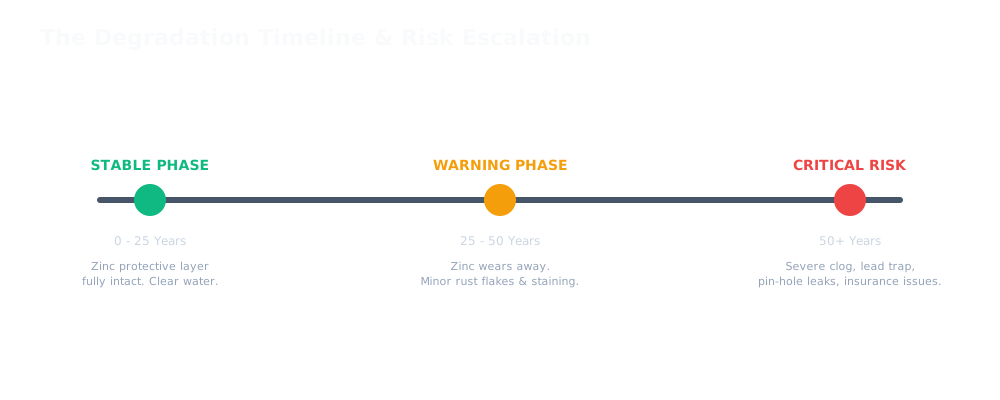
While this metallurgical design works beautifully for several decades, it is not permanent. Water is a universal solvent. Over time, the constant flow of municipal water, fluctuating pH levels, and dissolved minerals wear away at the interior zinc plating. Once this zinc lining is compromised, the vulnerable structural steel underneath is exposed directly to oxygenated water, starting an irreversible, self-destructive process of rust and scaling.

The Three Simple Tests to Identify Galvanized Pipes
As a homeowner or a prospective buyer walking through an open house, you can easily perform some initial detective work. To locate your active plumbing pipes, head down to your basement, utility closet, or crawlspace. Look specifically for the primary water line where it enters your foundation wall from the street (usually near the water meter), and check the exposed floor joists overhead where distribution lines run up to the kitchen and bathrooms.
Once you locate an exposed run of metallic piping, you can identify the exact material using three quick steps: the Visual Inspection, the Scratch Test, and the Magnet Test.
Step 1: The Visual Inspection
Look at the pipe's texture and joints. Copper pipes are thin, clean, reddish-brown (or greenish-blue if oxidized), and are joined together with smooth soldered fittings. Galvanized steel pipes are much thicker, have a rough, dull gray metallic texture, and are joined together using threaded connections. You will see visible threads screwed directly into elbows, couplings, and tees.
Step 2: The Scratch Test
Take an ordinary flathead screwdriver or a sturdy coin. Find a clear, easily accessible section of the pipe and firmly scratch the surface of the metal.
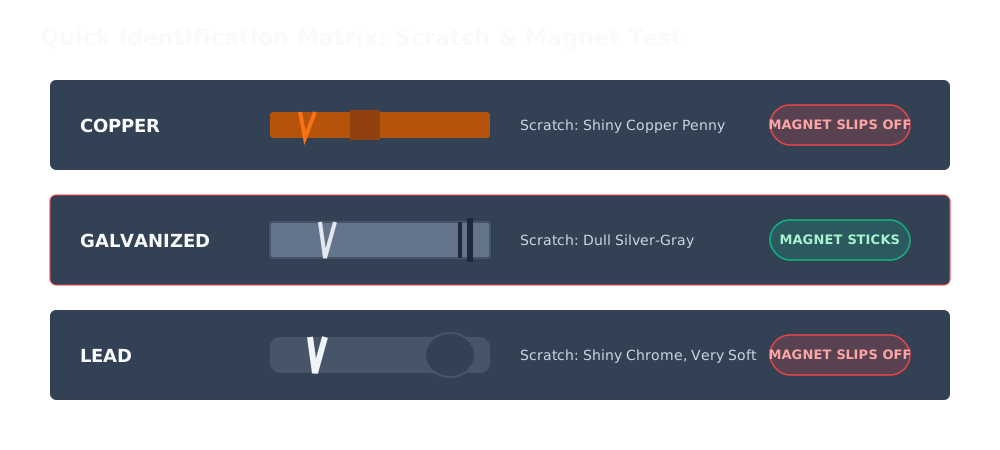
- If the scratched area glows like a bright penny, the pipe is copper.
- If the scratched area is soft, dull, easily gouged, and looks like a bright, shiny silver-white metal, you have lead (a major health hazard that must be replaced).
- If the scratched area is hard, difficult to scratch, and reveals a dull, light-silvery gray color underneath the surface dirt, you are looking at galvanized steel.
Step 3: The Magnet Test
This is the ultimate, non-destructive test. Grab a strong kitchen refrigerator magnet or a magnetic stud finder and place it directly against the scratched portion of the metal pipe.
- If the magnet clings firmly to the pipe, the underlying metal is iron-based, confirming that you have galvanized steel.
- If the magnet falls off, the metal is non-magnetic, meaning it is either copper or lead.
The Hidden Risks to Your Home and Health
If you confirm that galvanized steel is actively supplying your home with water, you need to understand that this is not just an aesthetic issue. Operating an aged system carries real structural and toxicological hazards.
1. Loss of Water Pressure and Restricted Flow
As corrosion builds up inside the pipe walls, it creates a rough, jagged matrix of oxidized rust and mineral crust. This restricts water volume in two ways: first, by physically closing off the inside diameter of the pipe, and second, by adding massive frictional resistance against the passing water. You will notice this when you turn on your shower and the water pressure instantly drops to a trickle if someone flushes a toilet or starts the washing machine downstairs.
2. Severe Corrosion and Sudden Pin-hole Leaks
Because galvanized pipes corrode internally, the exterior metal shell can hide critical structural flaws. Rust spots expand unevenly, eventually eating completely through the steel walls. These structural weak spots typically manifest as slow, weeping pin-hole leaks or catastrophically burst joints during water pressure spikes, resulting in massive drywall, structural timber, and personal property damage.
3. Dangerous Water Discoloration and Lead Concentration
Have you ever turned on a faucet first thing in the morning only to be greeted by rusty, yellow-brown water? That discoloration is iron and zinc rust sediment releasing from the inner walls of your pipes after sitting dormant overnight. Worse still, early industrial galvanized pipes often used a zinc coating containing natural lead impurities. As this zinc coating degrades over the years, it can release lead into your tap water. Furthermore, if lead lines existed upstream, the rough, interior scaling of galvanized pipes actually traps lead particles, acting as a historical reservoir that continuously sheds lead into your family's drinking water.
What to Do If Your Home Has Galvanized Pipes
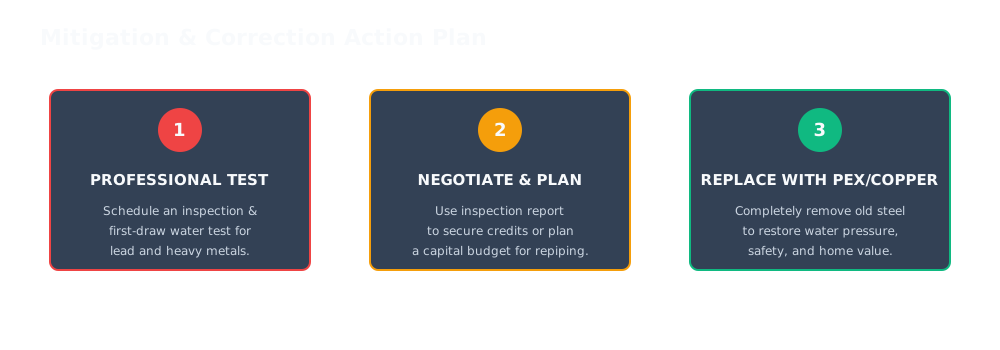
Finding galvanized pipes during a home inspection is not an immediate reason to run away from a real estate deal, but it is a major negotiating and planning factor. Here are your strategic action steps if you find yourself dealing with galvanized plumbing:
Budget for Replacement
If the pipes are functional but old, prepare a financial game plan to repipe the home. Replacing all supply lines typically costs between $3,000 and $10,000 depending on the size of the home, the number of bathrooms, and accessibility. Modern repiping is usually executed using flexible, cross-linked polyethylene (PEX) or copper tubing, which can be easily routed through existing walls with minimal disruption.
Test Your Drinking Water
If you cannot afford to replace the plumbing immediately, protect your family by having your tap water analyzed by an accredited environmental laboratory. Ensure the water sample is collected using a first-draw protocol (the first water out of the faucet in the morning) to properly capture any heavy metal contamination that occurred while the water rested in contact with the galvanized metal overnight.
Negotiate Sellers' Concessions
If you are actively in the buying process, share your professional home inspection report with your realtor. Use the presence of active galvanized plumbing to negotiate a price drop, credit, or complete repiping from the seller prior to taking title. Most sellers understand that a certified inspector's evaluation makes galvanized lines a material defect that must be disclosed to any future buyer.
How long does galvanized plumbing typically last?
Galvanized steel pipes generally have a service life of 40 to 60 years. Since most homes in our Northeast Ohio service area with galvanized plumbing were built before 1960, these systems are now well past their engineered lifespan. Even if they are not currently leaking, they should be considered end-of-life materials slated for replacement.
Will home insurance cover a failure of galvanized pipes?
Generally, if a pipe bursts suddenly, home insurance may cover the cleanup and water damage restoration, but they will not pay to fix or replace the actual plumbing line itself. Crucially, many insurance carriers in Northeast Ohio now actively screen homes for galvanized plumbing during the underwriting phase. If found, they may deny coverage completely, charge premium surcharges, or require proof of total replacement within 30 days of closing.
Can I replace my galvanized pipes in stages, or does it all have to be done at once?
While a total structural replacement is the gold standard, you can execute a staged upgrade. Priority should always be given to the primary horizontal water lines running through your unheated basement, as these are under the highest hydraulic pressure and are most prone to sudden failure. You can temporarily leave vertical runs inside walls until you remodel kitchens or bathrooms, at which point those walls will be open and easily accessible.
Do you need peace of mind before buying or listing a home in Lakewood, Cleveland, Canton, or the surrounding communities? Do not let hidden, corroded piping surprise you after the keys are in your hand. Contact Jim Husseini at Pinnacle Inspection Services today to schedule your comprehensive, certified home inspection.