

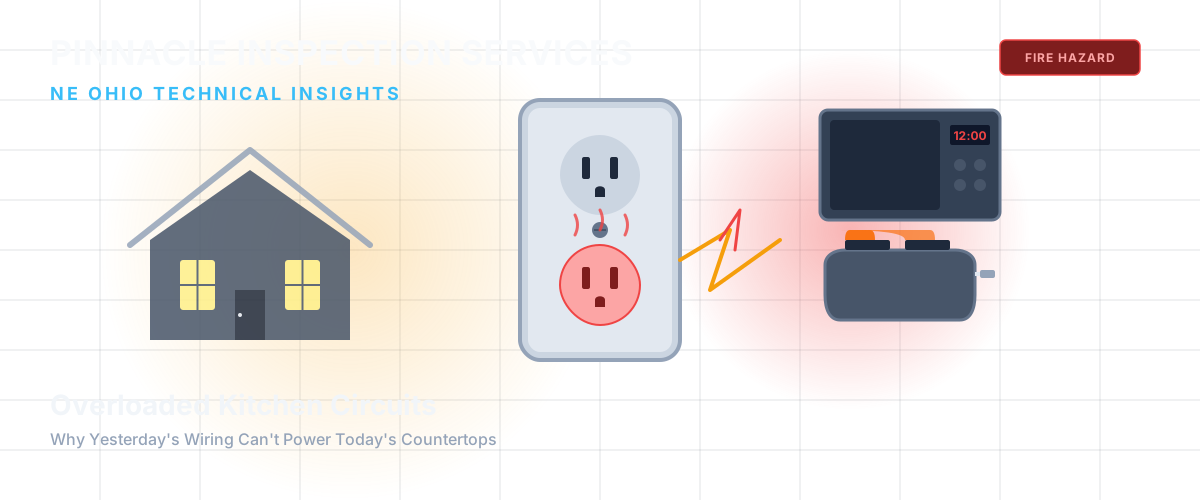
As you step into one of Northeast Ohio’s beautifully preserved homes—whether it is a classic 1920s Craftsman bungalow in Lakewood, a sprawling Tudor in Shaker Heights, or a mid-century colonial in Cleveland Heights—you cannot help but admire the craftsmanship. However, as a Certified Professional Inspector (C.P.I.), my eyes quickly migrate from the gorgeous hardwood floors and built-in leaded glass cabinets straight to the electrical outlets. Kitchens built more than forty years ago were never designed to support the heavy electrical loads of modern living. When we try to squeeze 21st-century power demands through mid-20th-century wiring systems, the result is a hidden, high-temperature hazard waiting to strike.
- Severe Fire Hazards: Overloaded wires can heat up silently behind lath-and-plaster or drywall, melting insulation long before a standard vintage fuse or breaker trips.
- The Modern Wattage Explosion: Today’s countertop appliances draw up to five times more electrical current than the small clocks and hand mixers used when these older homes were built.
- Obsolete Safety Features: Many historic homes still feature ungrounded two-prong outlets, shared multi-wire branch circuits, or dangerous DIY panel modifications.
- Proactive Inspection Solutions: Spotting these hazards early through specialized thermal imaging and professional circuit mapping protects both your investment and your family.
The Electrical Evolution: Yesterday’s Convenience vs. Today’s Reality
To understand why older kitchens struggle with modern electrical loads, we must look at how domestic power demands have changed. In the 1940s, 1950s, and even the 1960s, a kitchen’s electrical footprint was remarkably small. The primary power draws were a refrigerator, a simple light fixture, and perhaps a low-wattage toaster or a small radio. Consequently, building codes of the era typically required only one or two 15-amp circuits to power the entire kitchen area.
Fast forward to today. The modern kitchen is a high-powered culinary workstation. On any given morning, you might run an espresso machine, a high-speed blender, a convection toaster oven, and an air fryer simultaneously. Each of these individual appliances is incredibly energy-intensive, routinely demanding anywhere from 1,000 to 1,800 watts of power.
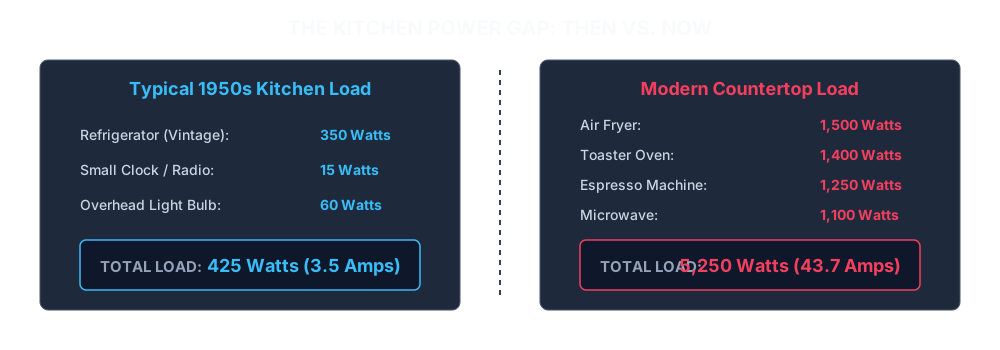
The math is simple and unforgiving. A standard 15-amp circuit running at 120 volts can safely handle a continuous load of only 1,440 watts (or a maximum temporary peak load of 1,800 watts). If you plug a modern 1,500-watt air fryer and a 1,200-watt coffee maker into the exact same outlet circuit and turn them both on at the same time, the combined load of 2,750 watts far exceeds what the circuit is built to handle. In a modern electrical system, this action immediately trips the circuit breaker. In an older system, however, things can go wrong very quickly.
The Physics of an Overload: What Happens Behind Your Plaster Walls?
When you overload an electrical circuit, you force more current (amperage) through the copper or aluminum conductors than they are physically sized to carry safely. This restriction creates resistance, and in physics, electrical resistance generates heat.
In a property constructed to modern building standards, the copper wires are safely insulated with high-grade, heat-resistant PVC plastic, and they are protected by sensitive thermal-magnetic circuit breakers. In older homes, we frequently find ancient, compromised materials. Many vintage homes built before 1950 utilize knob-and-tube wiring or early rubber-insulated, fabric-jacketed cables. Over the decades, the protective coatings on these conductors dry out, turn brittle, and easily crumble away when disturbed or overheated.

When high currents generate intense thermal energy, the fragile cloth insulation surrounding vintage wires begins to break down, crack, and char. Eventually, the bare, energized metal wires can touch each other directly, or make contact with framing timbers and old dust. This breakdown can trigger high-energy arcing events, launching intense bursts of electrical current that easily ignite nearby wood, paper framing, or lath-and-plaster backings.
The Danger of “Oversized” Fuses in Vintage Panel Boxes
In many older properties, you will find a classic glass-fuse box rather than a modern breaker panel. Homeowners back in the day faced a constant nuisance: their 15-amp fuses kept blowing because they were running too many items in the kitchen. To solve this hassle, many well-meaning but misguided residents did something highly dangerous—they unscrewed the blown 15-amp fuse and replaced it with a 20-amp or even a 30-amp fuse.
This modification is a severe hazard. While the larger fuse successfully stops blowing, the underlying copper wiring inside the walls is still only sized to carry 15 amps of current. By forcing 20 or 30 amps of electricity through a 15-amp wire, you turn the entire length of the cable inside your walls into a slow-cooking heating element. This issue is one of the most common electrical fire hazards we discover during home inspections in historic Northeast Ohio neighborhoods.
Recognizing the Warning Signs: Is Your Kitchen Crying for Help?
Fortunately, electrical systems usually provide early warning signs before they fail catastrophically. As a homeowner, staying alert to these subtle indicators can help you catch a major hazard long before it turns into an emergency.

Keep a close eye out for these critical danger signs in your home:
- Dimming or Flickering Lights: If the overhead kitchen lights dim momentarily whenever the microwave starts up or the refrigerator cycles on, it is a clear sign that the circuit is struggling to distribute voltage under heavy load.
- Warm or Discolored Outlets: Carefully touch your kitchen wall plates while using countertop appliances. If an outlet cover plate feels noticeably warm, or if you spot any brown, scorched, or melted plastic around the slot entryways, cease using that outlet immediately.
- Popping, Buzzing, or Hissing Sounds: Electricity should run silently. If you hear low, quiet buzzing or sudden snapping sounds behind a wall when you switch on an appliance, you are likely hearing hazardous electrical arcing.
- An Acrid Chemical Odor: The smell of melting electrical insulation is highly distinctive, resembling a strong chemical odor or burning fish. It is a critical warning sign of a high-temperature breakdown occurring inside your drywall cavity.
The Modern Standard: How We Remedied Kitchen Electrical Hazards
When purchasing an older home, or planning a renovation on a vintage property, the goal is not to preserve outdated electrical systems. Your focus should be upgrading the kitchen to meet current safety standards under the National Electrical Code (NEC).
Modern electrical guidelines mandate that a residential kitchen countertop area must be served by at least two dedicated 20-amp small appliance branch circuits (SABCs). These branch circuits must be entirely separate from the circuit powering your overhead lights. In addition, major energy consumers—such as refrigerators, built-in dishwashers, garbage disposals, and built-in microwaves—must each be supplied by their own dedicated individual circuits. This layout prevents high-draw appliances from sharing paths and overloading the rest of your kitchen.
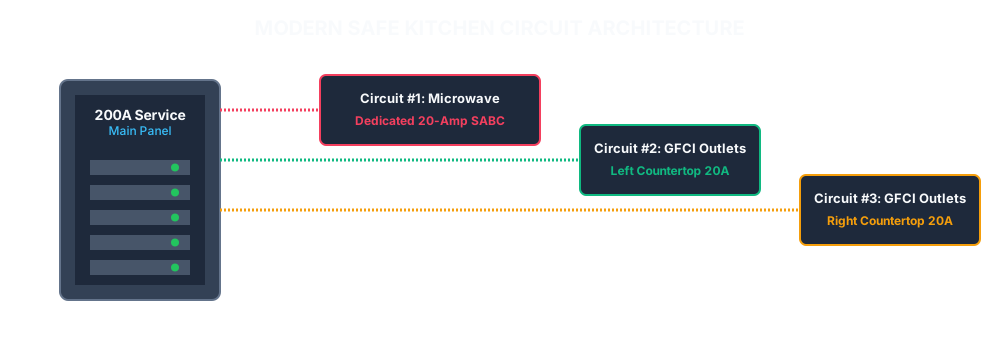
Additionally, modern safety codes strictly dictate that all kitchen countertop outlets must feature Ground Fault Circuit Interrupter (GFCI) protection. GFCIs monitor the balance of electrical current passing through a circuit. If the current flowing out of the outlet differs even slightly from the return current—which occurs if electricity finds an alternative path to ground through water, or a human body—the GFCI device cuts off the power in milliseconds to prevent severe shocks. During our comprehensive home inspections, we thoroughly test each kitchen receptacle to verify that it is properly protected, grounded, and wired with the correct polarity.
How do I know if my older kitchen is running on an overloaded circuit?
The easiest home test is to locate your main electrical panel and turn off the single breaker or fuse labeled “Kitchen.” Once switched off, walk through your kitchen and test every single countertop outlet, the overhead lights, and the refrigerator. If you find that a single breaker controls all of these fixtures simultaneously, your entire kitchen is operating on one shared circuit. This configuration is a classic sign of an obsolete vintage layout that will easily overload under the demands of modern high-wattage countertop appliances.
Can I resolve my kitchen’s tripping issue by replacing a 15-amp breaker with a 20-amp breaker?
Absolutely not. Doing so creates an extremely severe fire hazard. A circuit’s breaker or fuse is specifically sized to protect the copper wire hidden inside your walls. Standard 14-gauge household wiring is rated to handle a maximum load of only 15 amps safely. If you install a 20-amp breaker on 14-gauge wiring, the breaker will allow 20 amps of current to flow through a wire built for 15. The copper wire will rapidly overheat, char its protective insulation, and potentially spark a structure fire behind your drywall or lath-and-plaster walls.
How complicated is it to upgrade an older kitchen to modern 20-amp circuit standards?
Upgrading your kitchen’s power layout requires hiring a licensed, qualified residential electrician. The process typically involves running new, heavier-gauge 12-gauge copper wire from your main electrical service panel directly to your kitchen countertop areas. If your historic home still features old lath-and-plaster walls, a highly skilled electrician can often fish these new cables through crawlspaces, basements, or attic joists to minimize any disruption or cosmetic damage to your home’s vintage plaster details.
Protect Your Northeast Ohio Home with Pinnacle Inspection Services
Whether you are purchasing a classic turn-of-the-century Tudor in Shaker Heights, buying a charming craftsman home in Lakewood, or looking to ensure your long-time family home in Akron is safe, understanding the state of your electrical system is critical. A standard visual look at your walls is not enough to guarantee your safety; you need an expert, in-depth evaluation to detect hidden hazards inside your walls.
At Pinnacle Inspection Services, we leverage years of field-tested home inspection experience and top-tier technical training to deliver clear, comprehensive evaluations. We do not just glance at your breaker panel; we thoroughly inspect your outlets, evaluate your kitchen’s power distribution, and provide you with the absolute peace of mind you deserve. Contact Pinnacle Inspection Services today to schedule your comprehensive home inspection and ensure your vintage property remains a safe, comfortable sanctuary for years to come.