


As a certified property inspector in Northeast Ohio, I regularly step into basements, kitchens, and entryways of historic homes in Cleveland, Akron, Canton, and their surrounding suburbs. Many of these beautiful properties possess character that modern builds simply cannot replicate. However, they also house building materials from eras when asbestos was widely prized for its durability and fire-retardant properties. If you are preparing to remodel, buy, or settle into an older Ohio home, recognizing potential asbestos-containing floor tiles is an essential step in protecting your investment and your family’s health.
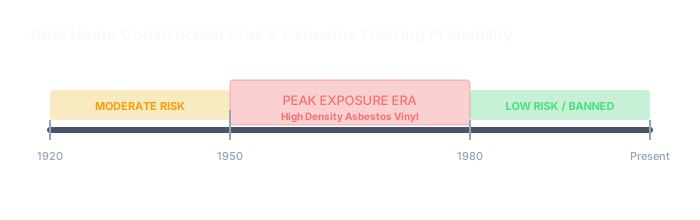
- The Construction Era Matters: Homes built or renovated between 1920 and 1980 carry a high probability of containing asbestos in their resilient floor tiles and associated adhesives.
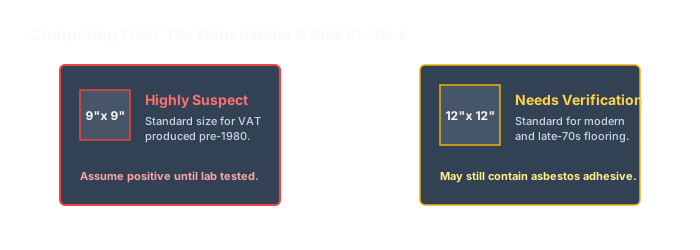
- Physical Dimensions Offer Clues: Traditional 9-inch by 9-inch tiles are highly classic indicators of asbestos composition, whereas 12-inch versions require closer scrutiny.
- Black Mastic Warning: The adhesive used to secure these tiles, often a dark black tar-like substance, frequently contains high concentrations of asbestos fibers.
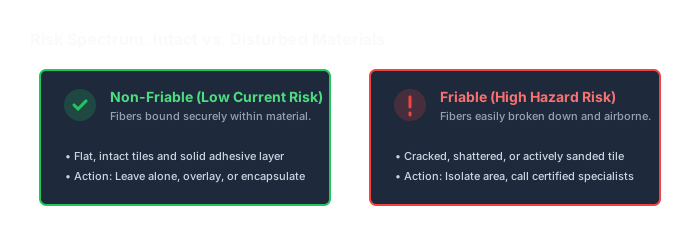
- Condition Determines Risk: Solid, intact tiles present very little risk, whereas cracked, crumbling, or sanded tiles pose direct health concerns.
- Professional Testing is Key: Visual inspection can suggest the presence of asbestos, but only laboratory testing can conclusively confirm its existence before renovation.
The Historic Housing Landscape of Northeast Ohio
Northeast Ohio is famous for its rich architectural heritage. From the classic craftsman bungalows of Lakewood and Cleveland Heights to the mid-century ranch-style homes in Parma and Cuyahoga Falls, our local housing stock reflects decades of industrial boom. Throughout the mid-20th century, builders heavily relied on vinyl asbestos plastic tiles (VAT) or asphalt-asbestos tiles. These materials were marketed as virtually indestructible, easy to clean, and incredibly economical.
For home buyers and current homeowners, these legacy tiles are most commonly discovered beneath carpet, modern laminate, or sheets of sheet vinyl in basements and utility rooms. Because these spaces are prone to dampness, original floor coverings were often glued directly to concrete slabs using heavy-duty asphaltic cutback adhesives. Knowing when your home was built provides the first major clue in assessing your risk profile.
Why Asbestos Was Favored in Flooring
To understand why this mineral is so pervasive, we have to look at what it offered. Asbestos is a naturally occurring group of silicate minerals characterized by thin, microscopic fibrous crystals. When mixed into vinyl or asphalt bases, it acted as a reinforcing agent. It made tiles extraordinarily tough, resistant to water damage, resistant to alkaline cleanings, and completely fireproof. These properties made it the darling of commercial and residential architecture alike.
Visual Clues: How to Spot Potential Asbestos Tiles
While only a certified laboratory can confirm asbestos presence through polarized light microscopy (PLM), homeowners can look for highly telling visual signs. In my years performing home inspections in Northeast Ohio, these three physical characteristics are the most dependable indicators that a floor requires specialized handling.
The 9-Inch by 9-Inch Standard
The single most common indicator of asbestos-containing floor tile is its dimensional sizing. While modern vinyl composition tiles (VCT) found in home improvement stores are almost universally 12 inches by 12 inches, older asbestos-laden tiles were heavily manufactured in 9-inch by 9-inch squares. Some even older structures might contain 6-inch by 6-inch or larger, thick asphaltic tiles, but the 9×9 layout is the classic “red flag” size that inspectors look for first.
Black Mastic Adhesive
Sometimes, the tiles themselves might have been pulled up years ago, but the adhesive beneath them remains on the concrete floor. If you pull back old carpet or sheet vinyl and discover a thick, black, tar-like glue smeared across the subfloor, you are likely looking at cutback asphaltic adhesive. This black mastic was heavily formulated with asbestos to improve its hold and prevent mold growth in damp basement environments. Never attempt to scrape, sand, or chemical-strip this black residue without professional guidance.
Understanding Friability: When is Asbestos Dangerous?
One of the most important concepts for any homeowner to understand is the difference between “friable” and “non-friable” asbestos. This distinction dictates whether a material poses an active hazard or can be safely left alone.
In its original, unbroken state, asbestos floor tile is classified as non-friable. This means the fibers are tightly bound inside the vinyl or asphalt matrix and cannot easily become airborne. However, if these tiles are subjected to mechanical actions like grinding, sanding, drilling, sawing, or aggressive scraping, they transition into a friable state, releasing millions of microscopic fibers into your indoor air supply.
What to Do If You Discover Suspected Tiles
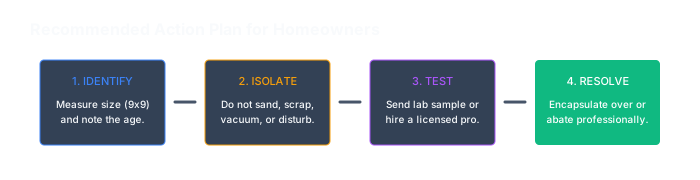
If you discover 9×9 tiles in your basement, or suspect the black adhesive beneath your floor coverings is asbestos-based, do not panic. Following a systematic safety protocol will keep your household safe and prevent costly environmental cleanup bills.
Your first and most vital rule: Do not disturb them. If you plan to lay new flooring down over the area, you can often leave the old tiles in place. Applying a self-leveling underlayment or installing a floating floor directly over intact, non-friable asbestos tile is a widely accepted, highly safe containment strategy known as encapsulation.
If you must remove the tiles for plumbing repairs, leveling, or major structural work, you must obtain a laboratory test kit or hire a licensed asbestos surveyor to take physical samples. This small investment ensures that you do not accidentally expose your family, pets, and contractors to invisible, hazardous dust.
Testing and Professional Assessment
When you are purchasing an older home, having a knowledgeable home inspector who can point out suspected asbestos installations is invaluable. While standard home inspections do not include laboratory testing, a skilled inspector can warn you of suspected areas so you can request seller concessions or perform localized testing prior to finalizing your closing papers.
How do I know for sure if my old floor tiles contain asbestos?
The only way to know for certain is through professional laboratory analysis. While visual indicators like 9×9 measurements and black mastic strongly suggest the presence of asbestos, microscopic evaluation is required to identify the actual asbestos mineral fibers (usually chrysotile) embedded within the vinyl or adhesive materials.
Can I lay new vinyl plank or carpet directly over asbestos floor tiles?
Yes, if the existing tiles are tightly adhered, flat, and in good overall condition, you can safely encapsulate them. Laying down self-leveling cement, underlayment sheets, luxury vinyl plank (LVP), or padding and carpet over the top is a very common, cost-effective, and safe approach approved by environmental experts. It seals the old fibers beneath a new, durable barrier without disturbing them.
What should I do if some of my asbestos tiles are already cracked or broken?
If a few tiles are chipped or broken, do not sweep, vacuum, or sand them, as this will spread fibers into the air. Dampen the area slightly to prevent dust from rising, carefully place any loose pieces into a sealed heavy-duty plastic bag, and cover the area with plastic sheeting or a temporary floor runner. If a substantial portion of the floor is severely degraded or crumbling, you should contact a licensed asbestos abatement contractor to perform a professional removal.
Navigating the purchase or remodeling of an older home can be challenging, but being armed with the right structural knowledge keeps you safe and financially secure. If you are looking to purchase or sell a home in Northeast Ohio, or if you simply want a comprehensive, professional assessment of a legacy property’s structural health, Pinnacle Inspection Services is here to help. Reach out today to secure an expert eye on your property’s key safety details.