
As a homeowner or homebuyer in Northeast Ohio, you are no stranger to our dramatic climate shifts. From freezing winds blowing off Lake Erie to sweltering, humid July afternoons, our homes must endure massive thermal swings. Your primary defense system against escalating energy bills and uncomfortable indoor drafts is sitting right above your head: your attic insulation. If your attic lacks the proper depth of insulation, your heating and cooling systems are working overtime, throwing money directly through your roof. Measuring this depth is one of the easiest, most high-impact diagnostic checks you can perform.
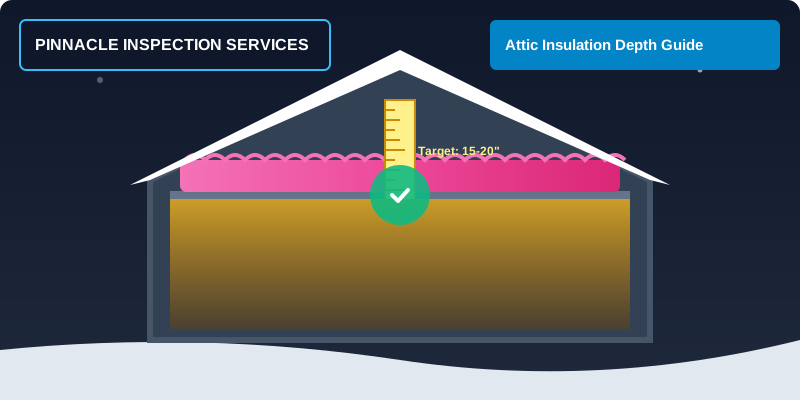
- Zone 5 Target R-Value: Northeast Ohio homes require an insulation rating between R-49 and R-60, which typically translates to 15 to 20 inches of insulation thickness.
- Quick Visual Metric: If you can easily see the tops of your wooden attic ceiling joists, your home is critically under-insulated.
- Material Variation: Different insulation types (fiberglass, cellulose, mineral wool) have varying R-values per inch, meaning your target depth depends directly on the material installed.
- Simple Assessment Tool: All you need to perform this check yourself is a standard tape measure or yardstick, a flashlight, and basic personal protective equipment (PPE).
Why Attic Insulation Depth is Critical in Northeast Ohio
In thermal science, heat always travels from a warm space to a cold space. During our freezing Northeast Ohio winters, the warm air generated by your furnace naturally rises and attempts to escape into your freezing attic. In the summer, solar radiation bakes your roof, turning your attic into a giant oven that forces heat down into your air-conditioned living spaces. Proper attic insulation acts as a highly resistant thermal barrier, slowing this transfer of energy dramatically.
The effectiveness of insulation is quantified by its R-Value, which measures the material’s thermal resistance. The higher the R-value, the better the insulating performance. The U.S. Department of Energy categorizes counties across the nation into distinct climate zones. Northeast Ohio sits firmly within Climate Zone 5.
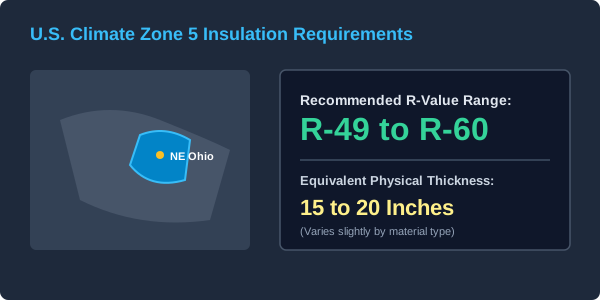
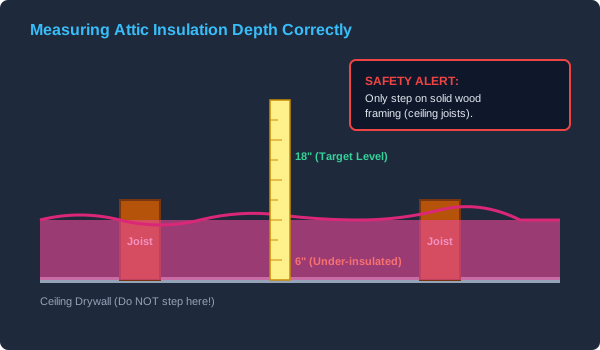
To achieve the recommended R-49 to R-60 standard in our local climate, your attic floor must be insulated to a depth that completely covers your structural wood framing. In most standard home construction, ceiling joists are 2×6 or 2×8 lumber (meaning they stand 5.5 to 7.25 inches tall). If you walk into your attic and can see these wood beams running across the floor, your insulation depth is less than 8 inches. This means your home is operating at an R-value of R-19 to R-25, which is less than half of what is required to efficiently protect your home from Ohio’s harsh winters.
Identifying Your Attic Insulation Material
Before you stick a ruler into your insulation, you need to identify the material. Different materials provide different rates of thermal resistance per inch of thickness. Knowing your material type allows you to run a highly accurate calculation of your home’s actual R-value.
1. Loose-Fill Fiberglass
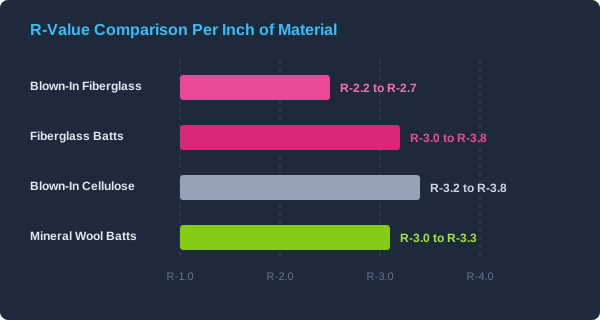
This material consists of lightweight, spun glass fibers blown into the attic space using a pneumatic machine. It is typically pink, white, or yellow and has a fluffy, cotton-candy-like texture. Loose-fill fiberglass provides an average R-value of 2.2 to 2.7 per inch.
2. Fiberglass Batts or Rolls
These are pre-cut blankets designed to fit snugly between standard joist spacing. They are usually pink or yellow and often feature a brown paper vapor barrier on one side. Standard fiberglass batts carry an R-value of 3.0 to 3.8 per inch.
3. Blown-In Cellulose
Made from recycled paper products (primarily newspaper treated with fire-retardant boric acid), cellulose is dense, gray, and has a finely shredded, powdery appearance. It packs tightly and blocks airflow effectively. Cellulose provides a higher R-value of 3.2 to 3.8 per inch.
4. Rockwool / Mineral Wool
This is a dense, fibrous material made from industrial slag and volcanic rock. It is typically gray or olive-green and possesses highly superior fire and moisture resistance. Mineral wool has an R-value of 3.0 to 3.3 per inch.
How to Measure Your Attic Insulation Depth
Checking your attic insulation depth is a straightforward process, but it does require physical entry into your attic space. Safety must be your absolute top priority before attempting this diagnostic step.
Step 1: Gather Safety Gear and Tools
Attics are dusty, fibrous environments that can contain hazardous irritants. Prepare the following gear:
- An N95 respirator mask to protect your lungs from fiberglass particles and dust.
- Safety glasses or goggles to prevent eye irritation.
- Long sleeves, pants, and heavy work gloves.
- A bright, high-lumen flashlight or headlamp.
- A rigid wooden yardstick or tape measure.
- A notepad and pen.
Step 2: Locate Safely Support Structures
CRITICAL WARNING: Never step off the wooden joists onto the drywall ceiling below. The drywall ceiling of your home cannot support your body weight; stepping on it will result in a dangerous fall through the ceiling. Only step directly onto the solid wood framing members (ceiling joists) or temporary wooden work planks laid across them.
Step 3: Measure Multiple Points
Do not simply measure close to the attic hatch or access panel. Attic insulation is often distributed unevenly due to historical air movement, past home repairs, or poor initial installation. Take measurements in at least 4 to 5 different locations throughout the attic space, especially near the center and towards the perimeter eave lines.
Step 4: Calculate Your R-Value
Once you have measured the average depth of insulation in inches, calculate your total R-value by multiplying that depth by the R-value per inch of your material type. Use this baseline math equation:
Insulation Depth (Inches) × Material R-Value Per Inch = Total Attic R-Value
For example, if you measure 8 inches of blown-in cellulose insulation (R-3.5 per inch):
8 inches × 3.5 = R-28
This result is significantly below the minimum R-49 rating recommended for Cleveland, Akron, and Canton area homes, signaling that a retrofitted layer of insulation is highly recommended.
Beyond Depth: Spotting the Attic “Bypasses”
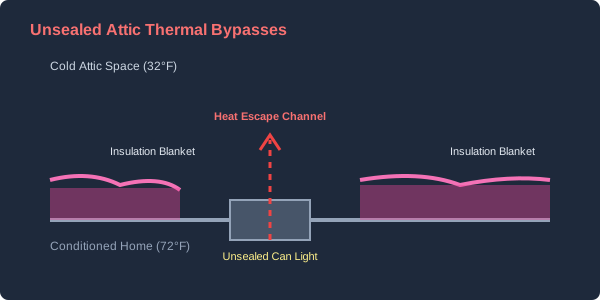
Achieving a depth of 18 inches of insulation is fantastic, but depth alone does not guarantee a high-performance attic. Heated air can bypass insulation entirely if your attic has not been properly air-sealed. Hot air rises and creates pressure against your ceiling, searching for tiny gaps, cracks, and penetrations to escape into the attic. We refer to these escape channels as attic bypasses.
During a professional attic inspection, we look closely for these critical areas where thermal performance is commonly lost:
- The Attic Access Hatch: Most attic hatches are simply uninsulated pieces of drywall or plywood. Uninsulated hatches act like a thermal hole in your ceiling, leaking heat rapidly.
- Recessed Light Cans: Standard recessed lights generate heat and penetrate directly into the attic. If they are not rated for direct insulation contact (IC-rated) and air-sealed, they bleed immense amounts of energy.
- Plumbing Stacks and Wire Chases: Open vertical pathways surrounding plumbing pipes, electrical wires, and ductwork allow interior conditioned air to rush straight up into your attic.
- Blocked Soffit Vents: When insulation is blown in, it must never block your soffit vents. Soffit ventilation provides a fresh air intake that prevents attic moisture buildup and ice dams. Specialized attic baffles must be installed to maintain this critical pathway.
Next Steps for Northeast Ohio Homeowners
If you perform your measurement check and discover your insulation is under 10 inches deep, or if your home struggles with cold drafts, high heating bills, and ice damming on your gutters, you need to take action. Upgrading attic insulation is one of the single most cost-effective home improvements available. It regularly yields a high return on investment through immediate, year-round utility bill savings.
Before buying bags of insulation, ensure your attic is assessed by a qualified professional. A professional inspector can verify structural integrity, identify active roof leaks, and check for hidden electrical issues like vintage knob-and-tube wiring that must be addressed before insulation is added.
How do I know if my attic insulation has settled and lost its R-value?
Yes, insulation materials settle over time. Loose-fill cellulose, in particular, can settle by up to 15 to 20 percent of its original installed depth, reducing its total R-value. If your home’s attic insulation is over 15 to 20 years old, it has likely compressed. Compression reduces the pockets of trapped air within the material, which are responsible for slowing down heat transfer. During an inspection, we evaluate both the depth and physical density of the insulation to determine if it requires a fresh cap or full replacement.
Can I just add new insulation directly on top of my old insulation?
In most cases, yes, you can blow new loose-fill insulation directly over existing insulation, provided the older material is dry, free of mold, and has not been contaminated by pests or rodents. However, you should never place faced batt insulation (batts with a paper vapor barrier) directly over existing insulation, as this can trap moisture between the layers and lead to structural rot and mold growth. Always consult a certified inspector to confirm that your existing insulation is safe to serve as a base layer.
What are ice dams, and are they related to attic insulation depth?
Ice dams are thick ridges of solid ice that build up along the eaves of a roof, preventing melting snow from draining off safely. This trapped water can back up under shingles, causing major ceiling leaks. Ice dams are directly caused by poor attic insulation and unsealed air bypasses. When heat escapes from your home into the attic, it warms the upper sections of the roof deck, melting the snow. As the melted water runs down to the cold, uninsulated overhang (eave), it refreezes. Maintaining a deep, uniform layer of insulation and professional air sealing is the best way to prevent ice dams in Northeast Ohio.
Are you buying a new home or concerned about rising energy bills in your current home? Don’t leave your comfort and energy budget to guesswork. Let a highly trained, certified expert assess your home from foundation to roofline. Reach out to Jim Husseini at Pinnacle Inspection Services today to schedule a thorough, professional home or attic inspection. We provide the detailed information and peace of mind you need to keep your home comfortable, safe, and energy-efficient through every Ohio season.