


As a certified home inspector operating in the unique, hard-shifting climate of Northeast Ohio, I regularly climb ladders, scan facades, and inspect structural components of beautiful brick homes. From historic Cleveland heights properties to modern commercial-scale brick fronts in Akron, one critical feature consistently determines whether a long brick wall will stand straight for a century or slowly tear itself apart from the inside out: the brick expansion joint. Brick is often perceived as a completely rigid, immovable object. In reality, it is a dynamic material that swells, shifts, and breathes in response to moisture, load, and extreme weather changes. Understanding why and how these expansion joints work is vital for every homeowner and prospective homebuyer in our region.
- Thermal and Moisture Dynamics: Clay bricks permanently expand over time after leaving the kiln, requiring planned relief gaps to prevent structural failure.
- Northeast Ohio Climate Vulnerability: Our local weather transitions rapidly from humid, hot summers to freezing, snow-laden winters, creating massive thermal expansion stresses.
- Expansion Joints vs. Control Joints: Brick walls require true compressible expansion joints, which differ fundamentally from concrete control joints.
- Identifying Failure Early: Missing joints manifest as stair-step cracking, bowing brickwork, and damaged window frames—costly issues if left unaddressed.
- Informed Decisions: Knowing what to look for when buying or maintaining a home preserves your equity and safeguards structural integrity.
Understanding the Dynamics of Clay Brick Movement
To appreciate why brick walls need expansion joints, we must first dispel the myth that masonry is static. Clay brick is a highly porous, natural material. Once fired in a kiln, clay bricks are at their absolute driest state. The moment they are exposed to atmospheric air, they begin absorbing moisture and slowly, permanently expanding. This long-term moisture expansion occurs over several years.
In addition to this irreversible moisture swelling, bricks undergo daily and seasonal thermal movement. When the summer sun beats down on a southern-facing brick facade in Canton or Cleveland, the masonry absorbs heat and expands. Conversely, during freezing winter nights, the brick contracts. If a brick wall is long, straight, and bound tightly at both ends without any room to move, these forces build up immense compressive stress.
The Differential Movement Problem
What makes matters more complex is that different building materials move in opposite directions. While clay brick expands permanently over its lifespan, the concrete foundation underneath it and the wood or concrete masonry unit (CMU) backup wall behind it actually shrink over time as they dry out. This variance is known as differential movement. Without a flexible connection point, the expanding brick wall will shear away from the shrinking frame of the house, resulting in severe structural damage.

Anatomy of a True Brick Expansion Joint
In residential construction, people often confuse expansion joints with control joints. These two features perform completely opposite tasks:
- Control joints are typically used in concrete, concrete slabs, and concrete block (CMU) walls. They are deliberate, weak planes (cuts or grooves) created to encourage the material to crack in a straight, controlled line when it inevitably contracts and shrinks.
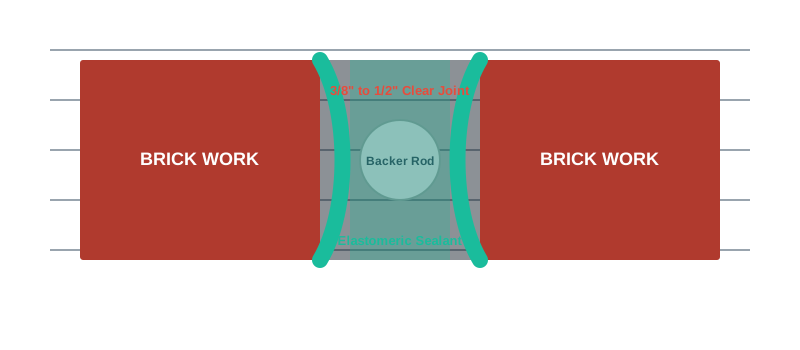
- Expansion joints are clean, continuous, unobstructed gaps built straight through the brick veneer. They contain no mortar. Instead, they are designed to close up slightly when the brick expands. They are filled with highly compressible materials to keep water out while allowing physical movement.
The Components of an Expansion Joint
A properly engineered vertical expansion joint consists of three primary components. First, there is a clear, clean gap through the entire depth of the brick wythe (usually 3/8 to 1/2 inch wide), completely free of mortar droppings. Second, a flexible foam backer rod is pressed into the gap. Third, an elastomeric, high-performance sealant (silicone or polyurethane) is applied over the backer rod to seal the joint against wind, driving rain, and pests, while retaining elasticity for decades.
Why Northeast Ohio Climate Amplifies the Danger
Here in Northeast Ohio, we do not have a mild, predictable climate. We experience rapid temperature swings, intense humidity from Lake Erie, and severe sub-zero winter temperatures. This environment is particularly punishing on long masonry walls without expansion relief.
Consider a sunny summer afternoon in Cleveland where a brick facade reaches surface temperatures of over 110 degrees Fahrenheit. The wall swells to its maximum thermal size. In winter, those temperatures drop below zero, forcing the bricks to shrink. If the wall is over 25 feet long and has no expansion joint, it cannot safely move. The thermal energy builds up, looking for the path of least resistance. It will buckle outward, crack, or destroy adjacent structures like window frames and doors.
The Freeze-Thaw Factor
In addition to physical movement, moisture intrusion poses a massive threat. When a brick wall cracks because it lacks movement relief, water enters those cracks. In Ohio’s harsh winter, this trapped water undergoes hundreds of freeze-thaw cycles. As water freezes, it expands by roughly 9%, acting as a hydraulic wedge that widens the cracks, spalls the brick faces, and rapidly degrades the mortar.

Warning Signs of Missing or Failed Expansion Joints
When performing inspections throughout Northeast Ohio, I pay special attention to long, unbroken runs of masonry. Here are the primary warning signs that indicate a home is missing expansion joints or that the existing joints have failed:
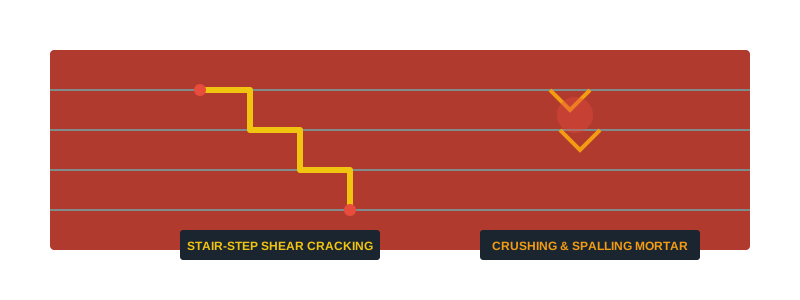
- Stair-Step Cracking: This is the most common diagnostic indicator. It appears as stepped cracks running along the mortar joints, usually near the corners of walls, windows, or doors. It shows that the wall is shearing under extreme thermal pressure.
- Bowing or Bulging Brickwork: If the bricks expand and have nowhere to go laterally, the wall will bow outward. This creates a highly dangerous situation where the brick veneer can detach entirely from the home’s structural framing.
- Spalling Bricks: When expanding brick sections push directly against each other with no compressible gap, the sheer force will crush the brick faces, causing them to flake off, crack, and crumble.
- Squeezed window and door frames: When a brick wall expands laterally, it will compress window frames, causing windows to bind, stick, or crack, and doors to pull out of alignment.
What an Inspector Looks For
When I inspect a home, I evaluate several key structural variables. I look at the total unbroken length of the brick facade. As a rule of thumb, vertical expansion joints should be installed every 25 feet in residential brick veneer walls, and even closer near corners (typically within 10 feet). I look for joints around window openings and offsets. I also check the physical condition of the sealant. If the sealant is dried out, brittle, or pulling away, water can infiltrate the structural cavity behind the brick, which leads to rotting framing and mold growth.
Remediation: Retrofitting an Expansion Joint
If you own a brick home in Northeast Ohio that is suffering from cracking due to a lack of movement relief, there is good news: the issue can be repaired. A professional mason can retroactively cut an expansion joint into your brick veneer. This process involves using a diamond blade saw to slice a vertical channel straight through the brickwork, cleaning out the debris, inserting a compressible backer rod, and sealing the joint with elastic sealant. While this requires a professional hand, it is significantly cheaper than rebuilding a collapsed, bowed, or failed brick wall.
How often should a brick home have expansion joints?
In general, modern building codes and the Masonry Association recommend placing vertical expansion joints every 25 feet along continuous brick veneer walls. Additionally, they should be located within 10 feet of any corner, at points where wall heights change, and where brick transitions to other materials.
Can I just patch cracked brick mortar with standard concrete caulk?
No. Patching cracks with standard caulk or rigid mortar does not resolve the underlying issue. If the wall lacks room to expand, the thermal stress will simply create new cracks next to the patch. The underlying lack of movement relief must be addressed, typically by cutting a professional expansion joint and using high-grade elastomeric sealant.
How can I tell if my existing brick expansion joint is failing?
Check the sealant inside the joint. If it is cracked, dry, brittle, showing visible gaps, or pulling away from the brick face, the joint is compromised. Once the sealant fails, water can easily get behind the brick veneer, leading to rot, mold, and destructive freeze-thaw cracking inside the wall cavity.
Safeguard Your Investment with Pinnacle Inspection Services
Whether you are buying a beautiful new home in Northeast Ohio or want to ensure your current home is structurally sound, don’t leave your masonry to chance. Structural repairs to brick facades are among the most expensive projects a homeowner can face. At Pinnacle Inspection Services, led by Jim Husseini B.S., C.P.I., we provide the detailed, highly visual, and accurate structural inspections you need to make informed decisions. Contact us today to schedule your comprehensive home inspection and ensure your home is built to withstand Ohio’s toughest seasons.