
If you’ve spent any time driving through the historic neighborhoods of Cleveland, Lakewood, Akron, or Canton, you’ve likely admired the enduring beauty of our Northeast Ohio brick homes. These structures were built to withstand the elements, but even the sturdiest masonry has a hidden vulnerability. Over almost every window and door opening in a brick-faced home sits an unsung structural hero: the steel lintel.
As a professional home inspector, I frequently crawl, climb, and peer closely at these critical steel supports. Over time, moisture, temperature swings, and salt exposure can turn these sturdy steel beams into ticking structural time bombs. Understanding how these lintels behave, what happens when they begin to fail, and how to spot the warning signs can save you thousands of dollars in masonry repairs.
What is a Lintel and Why Does It Fail?
A lintel is a horizontal structural member—usually a heavy steel L-angle in residential brick veneer construction—that spans the gap of a window or door opening. Its sole job is to carry the immense weight of the brick masonry directly above the opening and transfer that load to the adjacent wall studs or masonry piers.
In a perfect world, a lintel remains dry, protected by weep holes, flashing, and a tight mortar seal. But in Northeast Ohio, our extreme freeze-thaw cycles and high humidity create a harsh operating environment. When water penetrates the brick veneer—either through hairline cracks in the mortar, failed window caulking, or clogged weep holes—it pools directly on top of the cold steel lintel. Over years of seasonal cycles, this trapped moisture causes the steel to oxidize, forming iron oxide, commonly known as rust.

The Silent Threat: Scaling and “Rust Jacking”
Rust is not just an aesthetic issue; it is a structural force of nature. In its early stages, rust appears as a thin, reddish-brown film. However, as oxidation continues unchecked, the steel begins to undergo “scaling” or “exfoliation.” This is where the rust expands into thick, flaky layers that physically peel away from the core metal.
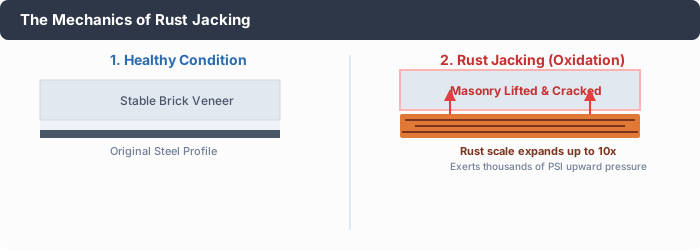
What many homeowners do not realize is that when steel rusts, the resulting iron oxide occupies up to **four to ten times the volume** of the original, uncorroded metal.
When this massive volume expansion is confined inside a tight masonry wall, it generates an incredibly destructive force known in building science as **rust jacking** or **oxide jacking**. As the steel scale thickens, it exerts immense upward pressure on the brick courses above it. Because mortar has high compressive strength but virtually no tensile (pulling/stretching) strength, the expanding steel easily ruptures the mortar joints, lifting the bricks and causing them to shift, crack, and pull away from the home’s framing.
Visual Clues Every Homeowner Should Look For
You do not need an engineering degree to spot a failing lintel; you just need to know where to look and what patterns indicate trouble. Walk around your home’s exterior and inspect the upper corners of your windows and doors. Look for these four key warning signs:
1. Step-Cracking” in the Mortar Joints:
If you see cracks resembling a staircase climbing upward and outward from the top corners of a window frame, this is a classic sign of lintel distress. The expanding steel is pushing the masonry upward, shearing the mortar joints.
2. Deflection or Sagging:
Stand back and look along the horizontal line of the window header. Does the steel beam curve downward in the middle? If a lintel loses its structural integrity due to severe scaling and rust, it can no longer support the masonry load, causing the bricks above to sag and pinch the window frame below.
3. Sticking or Hard-to-Operate Windows:
When a lintel sags or rust jacking distorts the framing, it puts physical pressure on the window unit. If you have windows that suddenly become difficult to open, close, or lock, the culprit could be the failing steel support directly above them.
4. Exposed Flaking and Rust Stains:
Visually inspect the underside of the lintel (the part visible above the window trim). If you see thick, wafer-like sheets of metal peeling off, or dark orange rust stains running down your brickwork or vinyl window trim, active, heavy corrosion is underway.
The Practical Takeaway for Homeowners
If you catch lintel corrosion early, the fix can be relatively straightforward. Wire-brushing the loose rust away, treating the metal with a high-quality rust-inhibiting primer, and applying a durable exterior paint can extend its life significantly. Additionally, ensuring that the mortar joints directly above the lintel are well-sealed and that weep holes remain clear will keep water from reaching the steel in the first place.
However, if the lintel is already sagging, or if rust jacking has sheared the surrounding masonry, simple maintenance will not suffice. At that stage, the damaged bricks must be carefully disassembled, the old lintel removed, a new galvanized steel lintel installed with proper flashing, and the masonry rebuilt. Ignoring these signs can eventually lead to localized masonry collapse, water damage inside your wall cavities, and expensive structural repairs.
Let Pinnacle Inspection Services Help
Whether you are preparing to buy a classic brick home in Northeast Ohio or want to assess the health of your current property, detecting these issues early is key to protecting your investment. At Pinnacle Inspection Services, we combine real-world building science with a meticulous eye for detail to spot hidden structural issues before they become costly emergencies.
Do not wait for a minor crack to turn into a major masonry failure. **[Contact Pinnacle Inspection Services today to schedule your comprehensive home inspection.]** Let’s make sure your home’s structural supports are as strong and secure as the day they were built.