
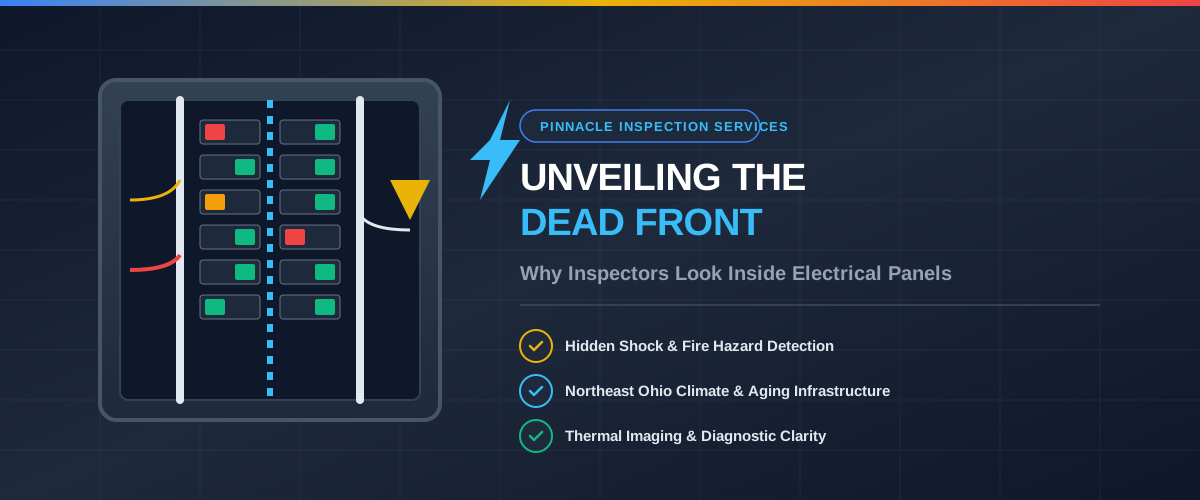
When buyers or homeowners watch a professional home inspector at work, one of the most critical moments occurs when the tool bag opens, safety glasses go on, and the screwdriver meets the metal cover of the main breaker box. Removing this protective steel panel—known in the trade as the “dead front”—is a pivotal step in any comprehensive home inspection. While a home’s light switches and outlets reveal how electricity is used, opening the panel reveals how safely that electricity is being supplied and distributed.
- Uncovering Concealed Risks: Over 80% of severe electrical hazards in residential properties are hidden behind the painted steel panel cover where everyday observers never look.
- Identifying Unlicensed Modifications: DIY wiring additions, improper breaker sizing, and dangerous “double tapping” are readily exposed during an internal panel evaluation.
- Mitigating Regional Climate Impact: Northeast Ohio’s high humidity, rapid freeze-thaw cycles, and aging housing stock lead to unique moisture intrusion, rust, and connection degradation inside electrical boxes.
- Detecting Recalled Equipment: Obsolete and hazardous panel brands (such as Federal Pacific Electric Stab-Lok and Zinsco) present active fire risks that are often only verifiable by examining internal components.
- Evaluating Capacity & Safety Limits: Inspectors verify whether the panel’s service size, bus bar condition, grounding, and bonding meet modern household power demands safely.
Opening the “Dead Front”: What Lies Beneath the Metal Cover?
To the average person, an electrical panel looks simple enough: a gray metal box filled with neat rows of black switches. However, that exterior plate is specifically designed as a protective barrier to shield occupants from dangerous, live electrical conductors. Removing the dead front is a high-liability task that should only be performed by trained professionals using insulated tools and proper safety protocols.
Once the dead front is safely set aside, the inner workings of the home’s primary electrical distribution center are exposed. This internal inspection permits the home inspector to review critical infrastructure components that cannot be evaluated from the outside.
Key Electrical Components Examined During Inspection
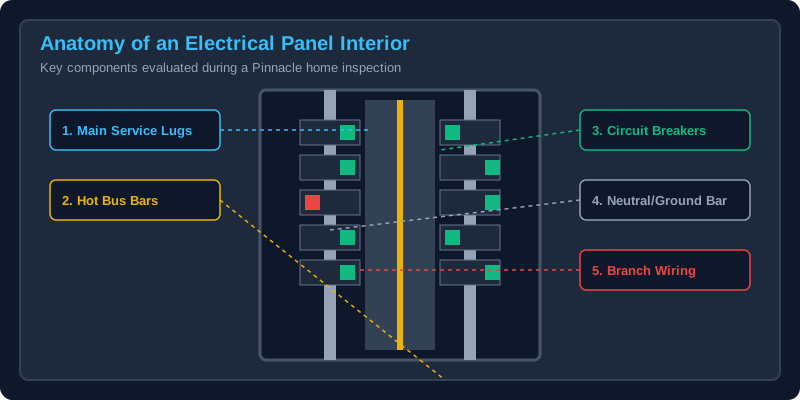
When the internal space of the breaker cabinet is made visible, an inspector systematically analyzes five vital structural points:
1. Main Lugs and Conductor Cables: The incoming feeder wires from the utility meter connect directly to the main lugs. Inspectors verify that these massive cables are made of proper materials (copper vs. aluminum), are free of severe oxidation, and are correctly torqued.
2. Bus Bars: Located deep within the panel, bus bars are metallic strips that conduct electricity from the main incoming power feed out to individual circuit breakers. Inspectors inspect bus bars for signs of pitting, arcing, localized heat discoloration, or chemical corrosion.
3. Circuit Breakers: Each breaker must match the panel’s brand specifications and be correctly rated for the ampacity of the wire attached to it. Inspectors look for mismatched manufacturer brands, loose connections, or scorched breaker bodies.
4. Neutral and Grounding Systems: Proper grounding and bonding prevent metal fixtures and appliance housings from becoming energized during an electrical fault. Inspectors verify that neutral wires and ground wires are properly separated in subpanels and securely bonded in main panels.
5. Branch Wiring Conductors: This is the web of copper or aluminum wiring radiating out to kitchens, bedrooms, and mechanical systems. Inspectors evaluate insulation integrity, wire gauge, and layout neatness.
Top Hidden Hazards Found Inside Home Electrical Panels
It is surprisingly common for a panel cover to look pristine on the outside while harboring active safety risks behind its steel exterior. Over years of occupancy, previous owners, DIY enthusiasts, or uncertified contractors often make improper alterations that compromise system safety.
1. Double Tapping (Double-Bushed Terminals)
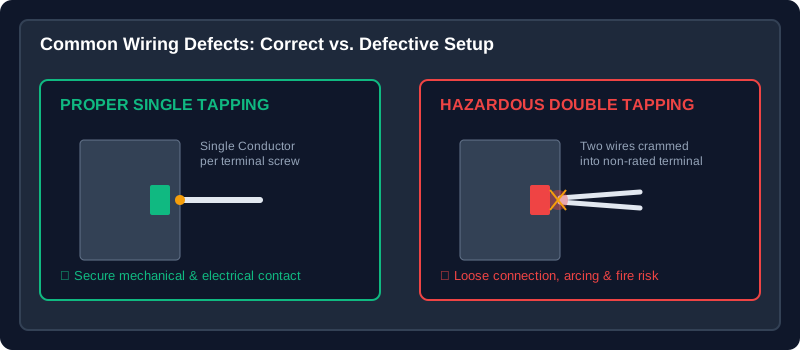
Most standard circuit breakers are designed and listed to hold exactly one wire. “Double tapping” occurs when an amateur electrician forces two separate circuit wires into a single breaker terminal to add an extra circuit without installing a new breaker. Because the terminal screw cannot apply equal clamping pressure to two wires simultaneously, one wire eventually loosens. Loose electrical connections create micro-arcing, extreme thermal buildup, and localized fire hazards.
2. Oversized Breakers on Undersized Wire Gauge
Circuit breakers are engineered to act as protective safety valves. Their main job is to trip and cut off electrical flow before the attached copper or aluminum wire gets hot enough to melt its plastic insulation. If a homeowner experiences frequent breaker trips on a 15-amp kitchen circuit, a common (and dangerous) DIY error is swapping the 15-amp breaker for a 20-amp or 30-amp breaker. If the hidden wire is only 14-gauge copper (rated for 15 amps max), the wire will overheat inside the walls long before the oversized breaker ever trips.
3. Solid-Conductor Aluminum Wiring Connections
In homes constructed roughly between 1965 and 1973, builders frequently used solid-conductor aluminum wiring due to copper shortages. Aluminum expands and contracts significantly more than copper under thermal load, leading to loose connections at panel terminals over time. Furthermore, aluminum undergoes oxidation when exposed to air, creating a resistive oxide outer layer that generates extreme heat. Inspectors open the panel to verify whether solid aluminum branch wires are present, and if so, whether anti-oxidant paste or approved CO/ALR transition connectors have been applied.
Unique Electrical Panel Challenges in Northeast Ohio
Homeowners in Cleveland, Akron, Canton, and surrounding Northeast Ohio communities face unique environmental conditions and structural histories that affect electrical safety inside panel boxes.
Moisture Ingress and Cold-Climate Condensation
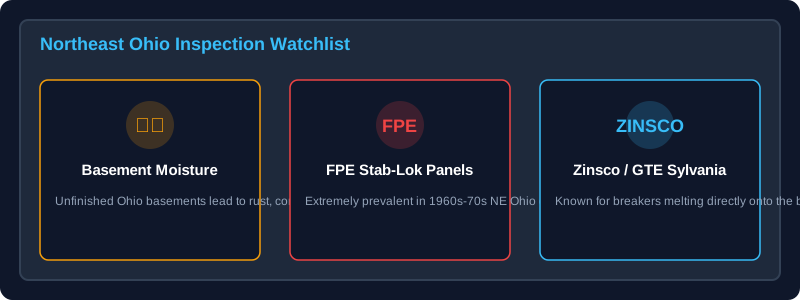
In Northeast Ohio, many electrical panels are located in damp basements or attached garages. Exterior service entrance cables (SE cables) that run down the outside of the home can age, crack, and act like a funnel during heavy rains or snowmelt. Water enters the cable jacket, flows downward via gravity, and drips straight into the top of the main panel box. Removing the dead front allows inspectors to check for flaking rust at the bottom of the cabinet, white oxidation scale on breaker contacts, and water-damaged main lugs.
Defective Legacy Panels: Federal Pacific Electric & Zinsco
During the housing booms of mid-to-late 20th century Ohio, thousands of homes were equipped with panels that are today recognized as severe fire hazards:
Federal Pacific Electric (FPE) Stab-Lok: Independent testing has shown that FPE Stab-Lok breakers fail to trip on overload or short circuit conditions at alarmingly high rates (often failing up to 60% of the time in multi-pole tests). Rather than cutting off power during an electrical fault, the breaker allows current to continue flowing until wires melt or catch fire.
Zinsco / GTE Sylvania: Zinsco panels feature aluminum bus bars that are highly prone to corrosion. The breaker contacts can fuse directly onto the bus bar. Once fused, the breaker switch may visually appear to be in the “off” position while electrical current continues to flow actively through the circuit.
Neither of these panel types can be reliably evaluated from the outside door. Removing the panel cover is required to confirm the internal bus bar layout, breaker clips, and brand markings.
Advanced Diagnostics: Using Infrared Thermal Imaging Inside Panels
At Pinnacle Inspection Services, visual evaluation is paired with modern infrared technology to detect invisible threats. Once the metal dead front is safely removed, home inspectors utilize FLIR infrared thermal cameras to scan internal components under normal operating load.
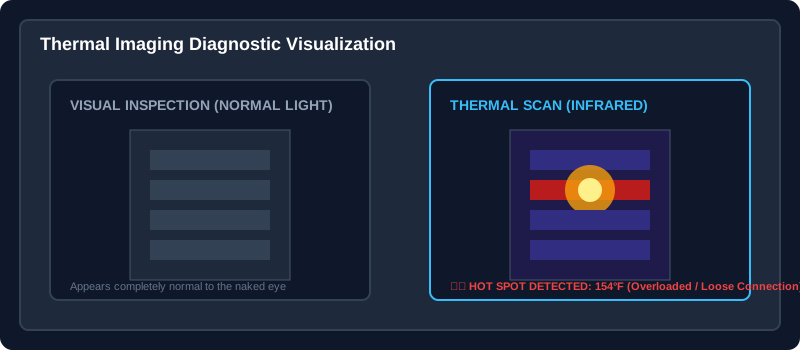
Every electrical circuit naturally produces a slight amount of heat as electric current moves through the resistance of copper wire. However, when a wire connection is loose, a circuit is severely overloaded, or a breaker internal mechanism is failing, local electrical resistance spikes dramatically. This resistance converts electrical energy directly into intense heat.
An infrared camera displays surface temperatures as a vivid color gradient. A circuit breaker operating safely might register at a cool blue or purple hue around 75°F to 85°F. A loose connection or failing lug, however, will glow bright yellow, white, or red—sometimes reaching thermal signatures well over 150°F to 200°F. Catching these thermal hot spots early allows home buyers to request repairs long before a circuit fails completely or sparks an attic or basement fire.
What Happens When an Inspector Finds an Electrical Issue?
Home inspectors are diagnostic consultants; they do not perform repair work on the spot to maintain absolute professional neutrality. When an issue is uncovered behind the panel cover, the inspector documents the exact defect with clear high-resolution photographs and detailed narrative explanations in your inspection report.
Depending on the severity of the findings, the recommendation will generally fall into one of two categories:
1. Further Evaluation & Repair by a Licensed Electrician: For localized defects like double taps, missing knockout bushings, oversized breakers, or isolated loose ground wires, a licensed electrician can often correct the problem efficiently without replacing the whole service setup.
2. Full Electrical Panel Upgrade (Service Panel Replacement): If the panel is an obsolete model (FPE Stab-Lok, Zinsco), exhibits extensive structural rust, has burnt bus bars, or lacks sufficient ampacity (e.g., an outdated 60-amp fuse box or overcrowded 100-amp panel in a modern high-demand home), a complete panel replacement is usually recommended for safety and insurability.
Frequently Asked Questions
Can a homeowner safely remove their own electrical panel cover?
No, homeowners should not attempt to remove the dead front cover themselves. Even when the main breaker is flipped to the “OFF” position, the primary incoming feeder cables and service lugs at the top of the panel remain fully energized with lethal current. Accidental contact with a screwdriver, jewelry, or hand can result in severe arc flash injuries or fatal electrocution. This evaluation should always be left to certified home inspectors and licensed electricians equipped with insulated safety tools and personal protective equipment.
What happens if a home inspector identifies a defect inside the panel?
When a defect is identified inside the panel, your Pinnacle inspection report will detail the precise location, photo evidence, and safety implications of the finding. You can then present this report to the seller or use it during real estate purchase negotiations to request repairs, ask for a financial credit, or require a licensed electrical contractor to certify and correct the system prior to closing.
Does an older 100-amp electrical panel need to be replaced immediately?
Not necessarily. A 100-amp panel is not inherently dangerous simply because of its size, provided it is in clean condition, correctly wired, and structurally sound. However, modern households with electric vehicles, central air conditioning, induction cooktops, and hot tubs often exceed the capacity of a 100-amp panel. If the panel is overcrowded or constantly tripping, upgrading to a modern 200-amp service is recommended for convenience, expansion, and future resale value.
Trust Pinnacle Inspection Services for Your Northeast Ohio Home
Your safety and peace of mind depend on getting a clear, unvarnished look at what is happening inside your prospective home’s critical systems. At Pinnacle Inspection Services, owner Jim Husseini B.S., C.P.I. brings deep technical expertise, advanced diagnostic equipment (including infrared thermal imagery), and uncompromising attention to detail to every home inspection across Northeast Ohio.
Whether you are purchasing a historic home in Cleveland, a mid-century ranch in Akron, or modern new construction in Canton, don’t leave your electrical safety to guesswork. Contact Pinnacle Inspection Services today to schedule your comprehensive, professional home inspection.