

When walking through a prospective home in Cleveland, Akron, Lakewood, or Canton, buyers often marvel at crown molding, quartz countertops, and freshly painted walls. However, behind those gleaming surfaces lies a complex, invisible network of electrical wiring. As owner and chief inspector at Pinnacle Inspection Services, one of the most frequent questions I receive from clients is why I spend so much time bent down in every room, plugging diagnostic instruments into every single wall outlet. The answer is simple: a single uninspected, faulty outlet can conceal life-threatening fire risks, shock hazards, or thousands of dollars in hidden electrical rewiring needs.
- Complete Hazard Detection: Testing every outlet reveals latent fire threats, short circuits, and improper DIY wiring that sampling misses.
- Exposing “Bootleg Grounds”: Advanced testing exposes dangerous quick-fix tricks meant to pass basic inspections artificially.
- Northeast Ohio Legacy Wiring: Local historical homes frequently mix knob-and-tube, aluminum wiring, and ungrounded systems behind modern faceplates.
- Life-Saving GFCI & AFCI Protection: Verifying functional shock and arc protection in high-risk moisture zones like kitchens, basements, and exteriors.
- Informed Negotiating Power: Comprehensive electrical evaluation provides concrete documentation to request repairs or seller concessions before closing.
The Illusion of “It Works”: Functional vs. Safe Electrical Outlets
To the average homeowner, an electrical outlet is evaluated on a simple binary: either it charges your phone or it doesn’t. Unfortunately, electricity is remarkably forgiving right up until the moment it causes a catastrophic arc fault or structural fire. An outlet can successfully power a lamp or a vacuum while simultaneously operating under conditions that violate building codes and overheat internal wall assemblies.
In standard real estate inspection protocol, some national standards permit “representative sampling”—meaning an inspector might test only one outlet per wall or per room. At Pinnacle Inspection Services, I firmly reject representative sampling for electrical receptacles. In practice, a previous DIY-minded homeowner may have replaced three outlets in a room correctly, but wired the fourth with reverse polarity or connected a dangerous “bootleg ground.” If an inspector tests only the first three, the dangerous fourth outlet remains a hidden threat to your family.
Understanding Outlet Polarity and Contact Tension
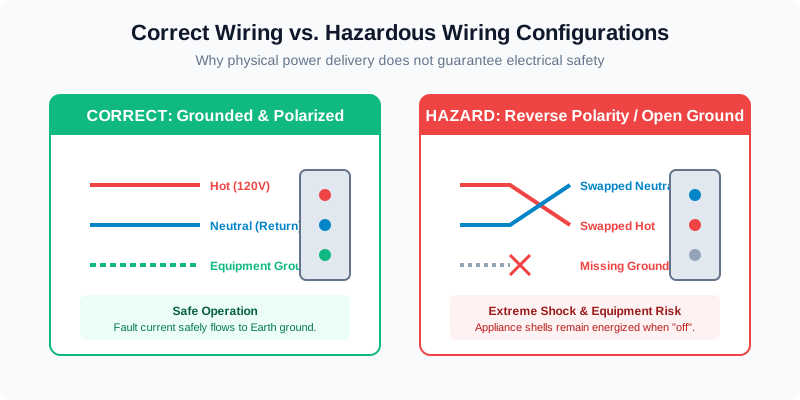
In a standard three-prong 120-volt household receptacle, each slot has a specific function:
- Small Vertical Slot (Hot): Delivers current from the breaker panel to the appliance.
- Large Vertical Slot (Neutral): Completes the electrical circuit by returning current to the panel.
- Rounded Bottom Slot (Ground): Provides a safe emergency pathway to Earth in the event of a short circuit.
When an outlet is wired with Reverse Polarity (Hot and Neutral wires swapped), appliances will still appear to function normally. However, internal switches will only turn off the neutral connection, leaving internal metal components energized even when the power switch is off. A simple bulb change in a lamp plugged into a reverse-polarity outlet can result in a severe electric shock.
Furthermore, standard plug testers do not measure physical mechanical hold. During an inspection, I test the contact tension of every receptacle. Loose metal leaves inside an aging outlet fail to grip plug prongs tightly. This creates electrical resistance, which generates intense heat, pitting, micro-arcing, and eventually electrical fires hidden inside the junction box.
The Northeast Ohio Context: Historic Homes & Legacy Wiring Systems
Here in Northeast Ohio, our housing inventory is rich with architectural charm, ranging from 1920s Craftsman bungalows in Shaker Heights and Lakewood to mid-century ranches in Parma and modern developments in Medina. However, historic charm comes with complex, multi-generational electrical evolution.
Knob-and-Tube (K&T) Wiring
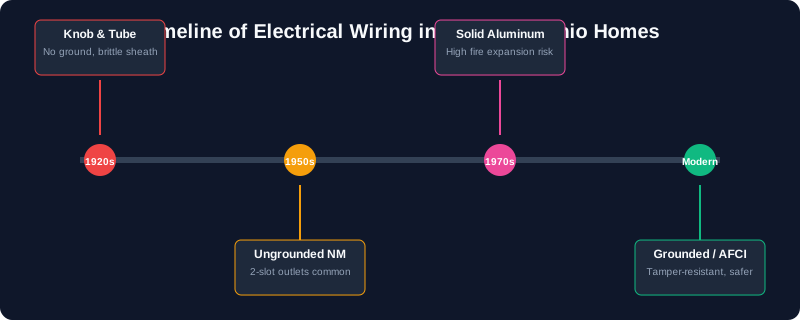
In homes constructed prior to 1950 across Northeast Ohio, Knob-and-Tube wiring was the standard installation method. K&T consists of single hot and neutral conductors run separately through walls, insulated with cloth sheathing, and supported by porcelain knobs and tubes. It contains no ground wire whatsoever.
The danger occurs when past owners or uncertified handymen installed modern three-prong outlets onto old K&T circuits without a ground connection, creating a false sense of security. Plugging sensitive electronics or surge protectors into these outlets leaves devices unprotected and introduces severe fire hazards if cloth insulation has deteriorated behind the wall plate.
Solid-Conductor Aluminum Wiring (1965–1973)
In many Northeast Ohio homes built during the late 1960s and early 1970s, builders utilized solid aluminum branch circuit wiring due to copper shortages. Aluminum expands and contracts at significantly higher rates than copper when carrying current. Over time, this thermal cycling causes terminal screws on standard outlets to loosen.
Loose connections lead to oxidation, extreme resistance, and glowing connections capable of igniting wall studs without blowing a circuit breaker. When testing outlets in homes from this era, every receptacle must be verified for aluminum-compatible ratings (CO/ALR devices) or proper copper pigtailing using specialized connectors like AlumiConn or COPALUM crimps.
Advanced Diagnostics: What Receptacle Testers and Infrared Cameras Reveal
At Pinnacle Inspection Services, inspecting an outlet involves far more than pushing a simple $10 hardware-store light tester into a plug. While basic three-light testers detect obvious open grounds or hot/neutral reverses, they can be easily fooled by complex wiring errors.
Circuit Analyzer vs. Standard Light Tester
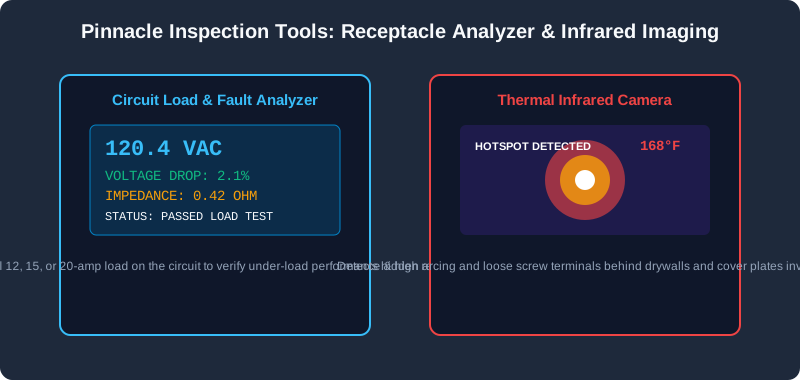
I utilize industrial-grade, micro-processor controlled circuit analyzers. Instead of merely checking for the presence of voltage, these diagnostic tools place an artificial 12, 15, or 20-amp load on the circuit for a fraction of a second. This measures key health metrics:
- Voltage Drop Under Load: Excessive drop indicates undersized wire, excessive circuit length, or poor spliced connections inside junction boxes.
- Ground Impedance: Measures how effectively the grounding wire can redirect dangerous fault current back to the panel during a surge.
- False Grounds / Bootleg Conditions: Detects dangerous tricks designed to deceive standard neon testers.
Infrared Thermal Scanning
In addition to electrical analyzers, Pinnacle Inspection Services integrates thermal imaging into electrical evaluations. Scanning outlet cover plates while under load reveals high-resistance connections long before they begin smoking or trip a breaker. An outlet reading 160°F or higher under normal load represents an immediate high-risk fire hazard hiding right behind innocent decorative faceplates.
The Threat of the “Bootleg Ground”
One of the single most dangerous conditions uncovered during a home inspection is the notorious Bootleg Ground. This usually occurs when an uncertified individual attempts to update an older two-slot ungrounded outlet to a modern three-slot outlet without running a new grounded wire back to the main service panel.
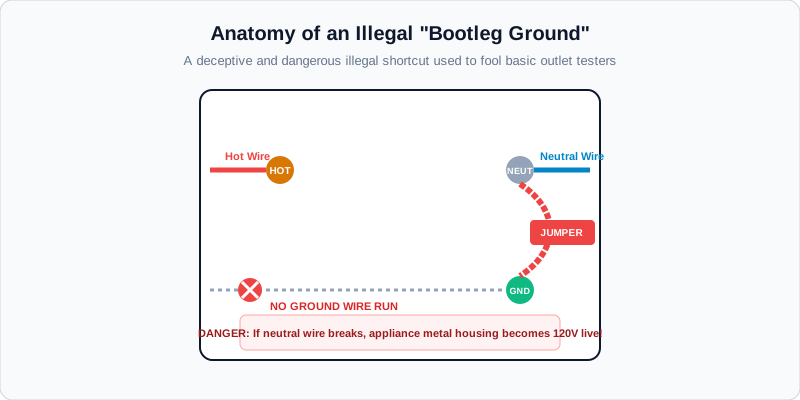
To fool a basic inspector’s three-light tester, an unscrupulous person connects a short jumper wire directly from the neutral terminal screw to the grounding terminal screw inside the receptacle box. Because neutral and ground are bonded together back at the main breaker panel, a cheap plug tester will illuminate lights indicating “Grounded Correctly.”
However, a bootleg ground is extraordinarily dangerous. If the neutral wire ever degrades or breaks anywhere upstream on that circuit, any appliance or computer plugged into that outlet will direct full 120-volt current straight through its metal casing. Touching a refrigerator, microwave, or computer tower plugged into a bootleg outlet under a fault condition can cause fatal electrocution. Only testing 100% of outlets with specialized advanced impedance tools reliably exposes bootleg grounds.
Ground Fault (GFCI) and Arc Fault (AFCI) Safety Mandates
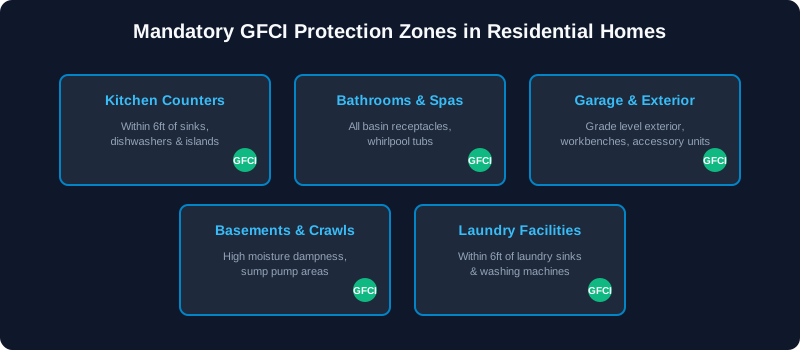
Modern building codes require specific electronic protection devices built into circuits or individual outlets to protect against electrocution and structural fires.
Ground Fault Circuit Interrupters (GFCI)
GFCI outlets continuously monitor the balance of electricity flowing between the hot and neutral conductors. If as little as 4 to 6 milliamperes of current leaks out of the intended path (such as passing through a person holding a hair dryer near a water-filled sink), the GFCI trips in as fast as 1/40th of a second, shutting off power instantly to prevent fatal electrocution.
During a home inspection, I physically test every GFCI outlet using built-in circuit analyzer trip tests rather than relying solely on the device’s faceplate “Test” button. In many older Northeast Ohio basements and garages, GFCI devices fail mechanically over time due to high humidity and freeze-thaw cycles, leaving power energized without active ground-fault shock protection.
Arc Fault Circuit Interrupters (AFCI)
While GFCIs protect human beings from electrical shocks, AFCI devices are designed to protect structures from fire. AFCI technology detects dangerous micro-arcing—sparking that occurs across damaged wire insulation, pinched appliance cords, or loose terminal screws inside wall outlets. Modern National Electrical Code (NEC) standards require AFCI protection across virtually all living room, bedroom, and hallway circuits. During a thorough home inspection, testing receptacles confirms that AFCI protection responds as intended across all branch circuits.
Real-World Inspection Findings: Why Skipping One Outlet Is a Risk
In my years inspecting properties across Cuyahoga, Summit, Medina, and Lorain counties, I have seen firsthand why “sampling” outlets fails buyers. Here are three brief case examples from local inspections:
- The Hidden Nursery Hazard (Lakewood, OH): In an updated 1918 Dutch Colonial, 11 out of 12 outlets on the second floor were correctly re-wired and grounded. The single outlet behind the crib in the nursery was wired with reverse polarity and had no ground wire attached to its metal box—a severe shock risk in the very room intended for a toddler.
- The Wet Basement Sump Pump Failure (Akron, OH): A finished basement contained four GFCI outlets on a single daisy-chained circuit. The outlet powering the primary sump pump was miswired upstream, causing the GFCI protection to lock out permanently under load—a defect that would have caused complete basement flooding during the first spring thunderstorm.
- The Glowing Kitchen Receptacle (Canton, OH): While performing infrared scanning on a freshly renovated kitchen counter outlet, thermal imaging revealed a 185°F hotspot. A contractor had over-tightened a wire nut, fracturing copper strands that were actively arcing behind brand-new subway tile.
Empowering Homebuyers with Actionable Reports
A home purchase is typically the largest financial investment you will ever make. Discovering systemic electrical faults after closing can result in unexpected contractor bills running from several hundred to tens of thousands of dollars for partial or complete home rewiring.
When Pinnacle Inspection Services checks every single outlet, you receive an easy-to-read, digital inspection report filled with high-resolution photos, thermal images, and plain-English descriptions of every defect found. This empirical evidence allows you and your real estate agent to negotiate repairs, request credit escrows, or require seller-funded corrections performed by licensed electricians prior to taking ownership.
Why do some outlets in older homes have only two slots instead of three?
Two-slot outlets indicate an ungrounded legacy circuit, common in homes built before 1962. These circuits lack a dedicated copper ground wire to channel unexpected electrical surges back to the main panel. While two-slot outlets are permitted to remain under grandfathered building codes if undamaged, they should never be replaced with three-slot outlets without either running a new grounded circuit or installing a GFCI receptacle labeled “No Equipment Ground.”
Can I just install plug adapters (three-prong to two-prong cheaters) instead of fixing the wiring?
Three-prong adapters (often called “cheater plugs”) are rarely safe long-term solutions. They rely on connecting a small ground tab or green wire lug directly to the wall plate cover screw. In most older homes, the junction box itself is ungrounded, meaning the adapter provides no actual ground protection at all. Using adapters with high-draw modern appliances or electronics risks both fire and shock.
What is the difference between a tripped circuit breaker and a tripped GFCI outlet?
A circuit breaker located inside your main breaker panel trips when a circuit experiences excess current overload (e.g., running a toaster and microwave simultaneously) or a direct short circuit. A GFCI outlet trips locally when it detects minute imbalances in current flow (as low as 4 milliamps) leaking to an unintentional ground path, protecting human beings from fatal shock hazards in damp environments.
Protect Your Investment with Pinnacle Inspection Services
Electrical safety is non-negotiable. Don’t rely on basic visual inspections or representative sampling when purchasing a home in Northeast Ohio. Whether you are buying a historic home in Shaker Heights, a mid-century home in Parma, or new construction in Medina, trust Jim Husseini and the team at Pinnacle Inspection Services to evaluate every corner, panel, and outlet in your home with uncompromising thoroughness.
Ready to schedule your comprehensive home inspection? Contact Pinnacle Inspection Services today to protect your family, your investment, and your peace of mind.