
Few phrases strike panic into the hearts of Northeast Ohio homeowners and prospective home buyers quite like “black mold.” The moment dark staining is discovered on a basement rim joist in Cleveland, or along a drywall seam in an Akron attic, visions of catastrophic structural loss and severe health crises immediately come to mind. But as a Certified Professional Inspector with a scientific background, I see a massive disconnect between the cultural panic surrounding black mold and the actual biological reality. The truth is, mold is a natural, highly manageable component of our ecosystem, and understanding what it actually is—and what it isn’t—is the first step toward maintaining a safe, healthy, and structurally sound home.
- Color Does Not Equal Toxicity: The dark color of a mold colony is simply a pigment and does not automatically mean it is producing dangerous mycotoxins.
- Stachybotrys Chartarum Needs Extreme Moisture: The infamous “toxic black mold” is highly selective and cannot grow without prolonged, active water saturation.
- Northeast Ohio Homes Are Highly Vulnerable: High seasonal humidity, lake-effect moisture, and older basement architectures make our local properties prime candidates for common, non-toxic molds.
- Scientific Testing is the Only Definitive Answer: You cannot identify mold species or determine toxicity levels with the naked eye; laboratory analysis is required.
Demystifying the Color Black in Mold
To understand mold, we must first look at its biology. Mold species belong to the fungi kingdom. They do not produce their own food through photosynthesis like plants; instead, they digest organic materials—such as wood, drywall paper, and ceiling tiles—using digestive enzymes. The color of a mold colony is determined by its pigmentation, which often acts as a protective shield against ultraviolet (UV) light or environmental stressors. It is not an indicator of chemical toxicity.
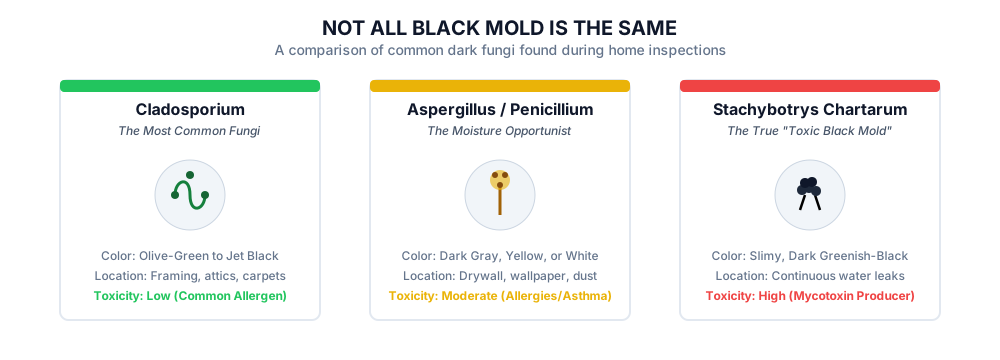
Many harmless or common molds are dark green, dark brown, or jet black. Conversely, some toxigenic molds can be yellow, white, or bright green. When people refer to “black mold” in a panic, they are usually thinking of a very specific genus called Stachybotrys. However, the most common black-colored molds found during home inspections are actually species like Cladosporium, Alternaria, or Aspergillus. None of these are the “toxic black mold” of media legend, though they can still act as allergens for sensitive individuals.
The Problem with the Term “Toxic Mold”
From a scientific standpoint, the term “toxic mold” is inaccurate. The mold organism itself is not toxic; rather, certain molds can produce chemical compounds called mycotoxins as secondary metabolites. These chemicals are produced under specific stress conditions, often when competing with other micro-organisms for dominance. Even if a toxigenic mold like Stachybotrys is growing in your home, it may not actively be producing mycotoxins at that time. However, because mycotoxins can travel on airborne spores and dust particles, professional mitigation is always recommended when these colonies are confirmed.
The Truth About Stachybotrys Chartarum
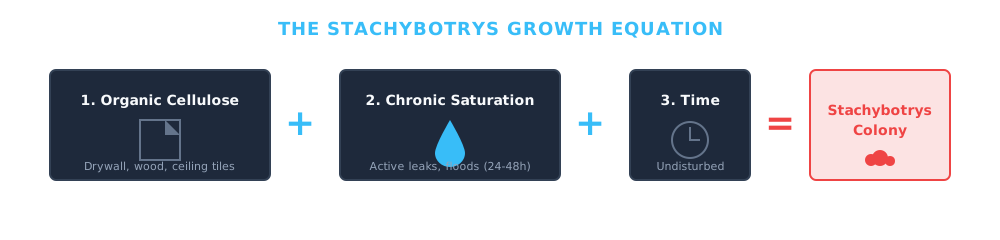
To demystify the fear, let’s look closely at Stachybotrys chartarum. This mold has a very specific set of requirements to germinate, colonize, and survive. Unlike more opportunistic molds that can grow from temporary humidity spikes, Stachybotrys requires continuous, long-term water exposure. It has a high water-activity requirement, meaning it only grows on materials that are actively saturated with water for days or weeks at a time.
Furthermore, Stachybotrys is highly cellulolytic, meaning it eats cellulose. It thrives on materials like drywall backing, wicker, paper, and fiberboard. It cannot grow on non-porous surfaces like concrete, plastic, metal, or glass, though it can grow on a thin layer of organic dust resting on those surfaces. Because of its heavy, sticky spore structure, its spores do not easily become airborne unless the mold is dried out, disturbed, or physical remediation is performed without containment.
Northeast Ohio’s Unique Mold Challenges
Every region has its own environmental challenges, and Northeast Ohio is no exception. Our climate features high humidity in the summer, heavy lake-effect rainfall, and freezing winters that trap moisture indoors. During my inspections in Cleveland, Akron, Canton, and surrounding areas, I frequently encounter conditions that encourage mold growth. The age of our housing stock is also a major factor. Many homes in Northeast Ohio were built in the early-to-mid 20th century with stone foundations, clay tile basements, and framing systems that lack modern vapor barriers.
There are three primary vectors for moisture in Northeast Ohio homes that consistently lead to mold growth:
- Hydrostatic Pressure in Basements: Rain and melting snow saturate the clay-heavy soils of Northeast Ohio. This water presses against masonry basement walls, seeping through cracks and cold joints in the concrete as vapor or liquid water.
- Attic Condensation: In winter, warm, moist air escapes from living spaces into poorly ventilated attics. When this warm air hits the cold underside of the roof sheathing, it condenses into water droplets, leading to dark mold growth along the wood.
- Lake Effect Humidity: The high relative humidity coming off Lake Erie during spring and summer can cause condensation on cold basement floors and walls, creating a perfect habitat for mold even without active plumbing leaks.

Inspection, Testing, and Real Solutions
When you encounter dark discoloration in your home, you shouldn’t panic, nor should you ignore it. Fungi can damage structural wood over time, and excessive indoor spore counts can affect air quality. The correct first step is to schedule a professional assessment. As a Certified Professional Inspector, I use specialized tools to investigate the root cause of the issue rather than just looking at the surface stain.
A professional mold investigation involves three key components:
- Thermal Imaging: Using an infrared camera allows us to see temperature differences within walls. Cold spots often point to hidden moisture plumes from active leaks or condensation, showing us where mold is likely to grow behind drywall.
- Moisture Meter Readings: A moisture meter measures the actual moisture content of wood, plaster, and drywall. If a dark area is bone dry, it may represent a historic, inactive leak. If it is wet, there is an active issue that must be addressed immediately.
- Environmental Sampling: If necessary, we can take physical samples using tape lifts or collect indoor air samples using a calibrated pump and spore traps. These samples are sent to an accredited laboratory to identify the mold genera present and calculate the spore concentration in the air compared to outdoor levels.

How to Handle Mold if Found
If mold is found, the cleanup strategy depends entirely on its scale. According to EPA guidelines, if the affected area is less than 10 square feet (about a 3×3 foot patch), most homeowners can handle the cleanup themselves. You can scrub the mold off hard surfaces using detergent and water, then dry the area completely. Avoid using bleach on wood or porous surfaces; bleach is mostly water, and the chlorine cannot penetrate porous wood, leaving water behind to feed the mold roots.
For larger areas, or if the mold is inside your HVAC system, you should hire a professional remediation contractor. They will set up containment zones using plastic sheeting and air scrubbers to keep spores from spreading through your home during cleanup.
Can I tell if mold is “toxic” just by looking at it?
No, you cannot determine if a mold colony is producing mycotoxins simply by looking at it. Many common, non-toxic molds are dark brown, dark green, or black, while some mycotoxin-producing strains can look white or yellow. The only way to know the genus and potential toxicity of a mold colony is to collect a physical sample and have it analyzed under a microscope by an accredited laboratory.
Does bleach kill mold on wood or drywall?
No, using bleach is not recommended for cleaning mold on porous materials like wood or drywall. Chemical bleach contains a high percentage of water. When applied, the chlorine stays on the surface, while the water penetrates deep into the material. This can actually provide more moisture to the mold’s root structure, leading to regrowth. For porous surfaces, physical removal of the material or using professional-grade biocides is required.
Will a mold problem ruin my chance of selling or buying a home?
No, a mold issue is fundamentally a moisture issue. Once the source of water penetration (like a foundation crack or attic leak) is repaired and the mold is properly cleaned up, the home is perfectly safe. Buyers and sellers can easily resolve these issues during a real estate transaction, provided they have a professional home inspection to document the scope of the problem and verify when it has been properly repaired.
If you are buying a home or suspect you have moisture and mold issues in your current property, don’t guess. Let a Certified Professional Inspector give you the objective, scientific facts. Contact Pinnacle Inspection Services today to schedule a comprehensive, thermal-imaging-backed home inspection and get peace of mind.